
Weddings have always carried meaning beyond the couple at their centre. They reflect culture, tradition, aspiration, and the social values of a particular era. Occasionally, however, a bride emerges whose wedding transcends the personal and becomes historic. These famous brides did not merely walk down the aisle; they influenced bridal fashion, reshaped expectations, and redefined what it meant to be a bride in their time.
This article explores some of the most famous brides in modern history, not only focusing on what they wore, but why their weddings mattered. From royal ceremonies watched by millions to quietly powerful choices that challenged tradition, these women left an enduring mark on how the world understands weddings.
Princess Diana: The Bride Who Humanised Royalty
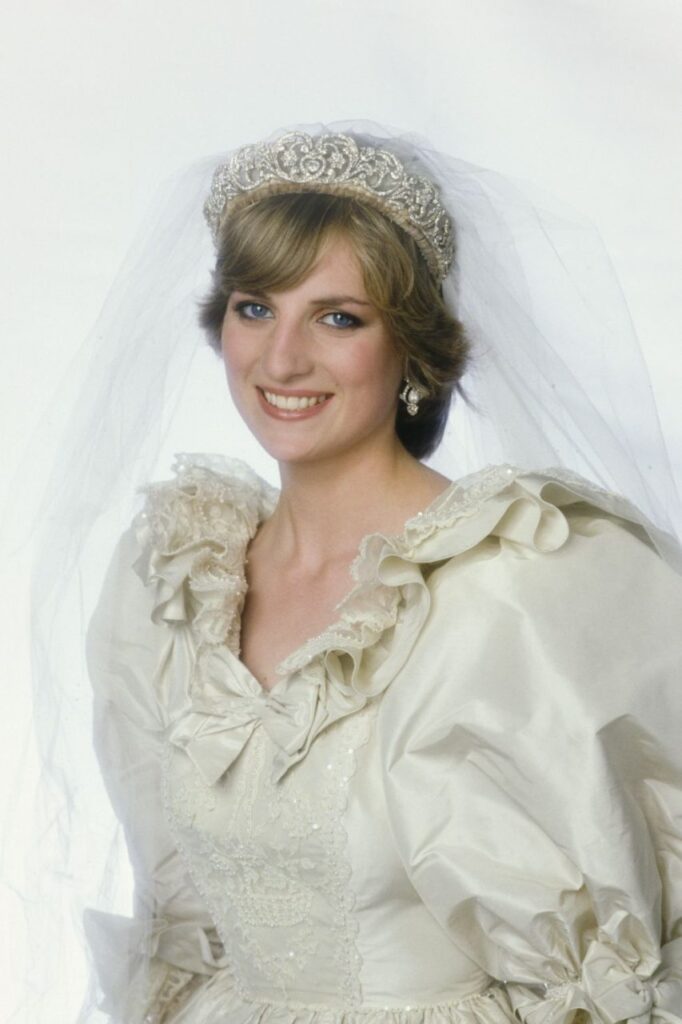
Few weddings have captured global attention like the 1981 marriage of Princess Diana to Prince Charles. Watched by hundreds of millions worldwide, it was framed as a modern fairy tale. Yet what made Diana unforgettable was not just the scale of the occasion, but the vulnerability she embodied.
Her ivory silk taffeta gown, with dramatic puffed sleeves and an extraordinary 25-foot train, epitomised 1980s romance and excess. At the time, it set bridal fashion alight, inspiring countless brides to embrace grandeur, volume, and theatrical silhouettes.
But Diana’s true impact lay elsewhere. She appeared nervous, young, and visibly overwhelmed. In contrast to the formality of royal tradition, she felt real. Brides around the world recognised themselves in her — hopeful, uncertain, and stepping into an unknown future.
Her legacy endures because:
- She made it acceptable for brides to be emotional and imperfect
- She shifted royal weddings from distant ceremony to human experience
- She proved that vulnerability could coexist with glamour
Even decades later, Diana remains a touchstone for bridal storytelling, not because her wedding was flawless, but because it was profoundly human.
Grace Kelly: Timeless Elegance That Redefined Bridal Style
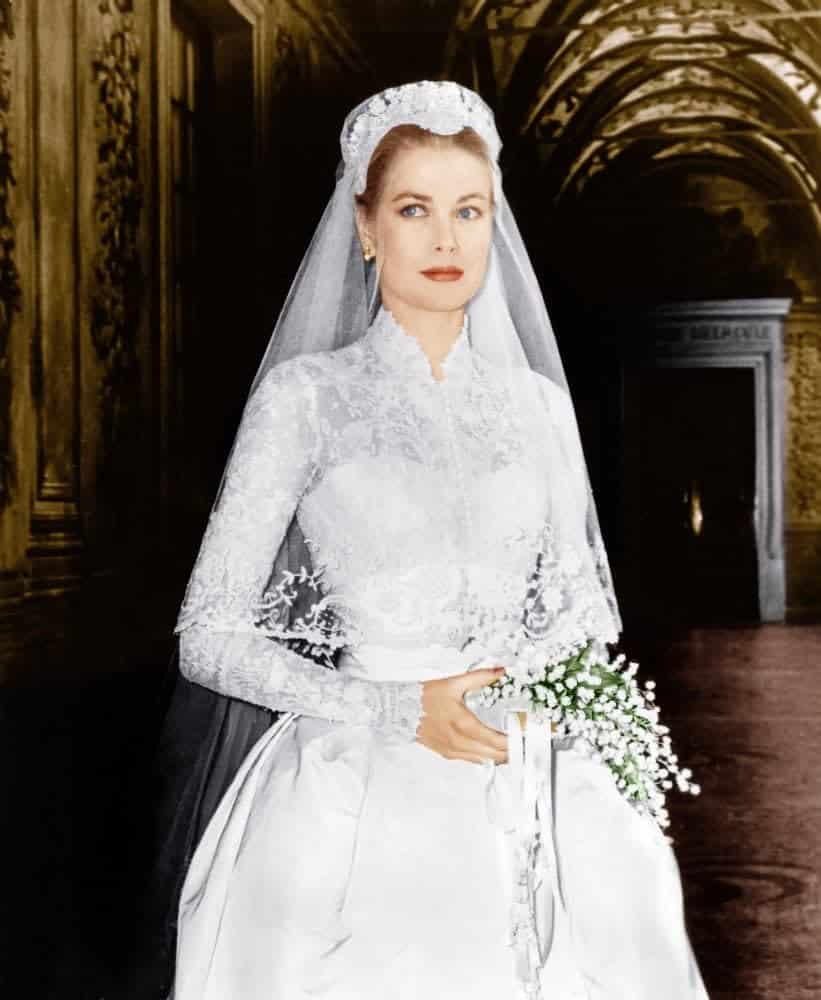
When Grace Kelly married Prince Rainier III of Monaco in 1956, the union symbolised a rare convergence of Hollywood glamour and European royalty. Unlike many high-profile weddings of the era, Grace Kelly’s bridal look was defined by restraint.
Her gown, designed by Helen Rose, featured a high neckline, long lace sleeves, and a structured silhouette that felt dignified rather than indulgent. It was modest, refined, and impeccably tailored — qualities that would come to define timeless bridal elegance.
Grace Kelly’s influence on bridal fashion is arguably unmatched. Her dress continues to inspire designers and brides decades later because it transcends trends.
Why her wedding mattered:
- It set a global standard for classic bridal elegance
- It demonstrated that modesty could be deeply glamorous
- It shifted bridal fashion towards longevity rather than spectacle
Grace Kelly proved that a bride does not need excess to command attention — grace alone is enough.
Catherine, Princess of Wales: Bridging Tradition and Modernity
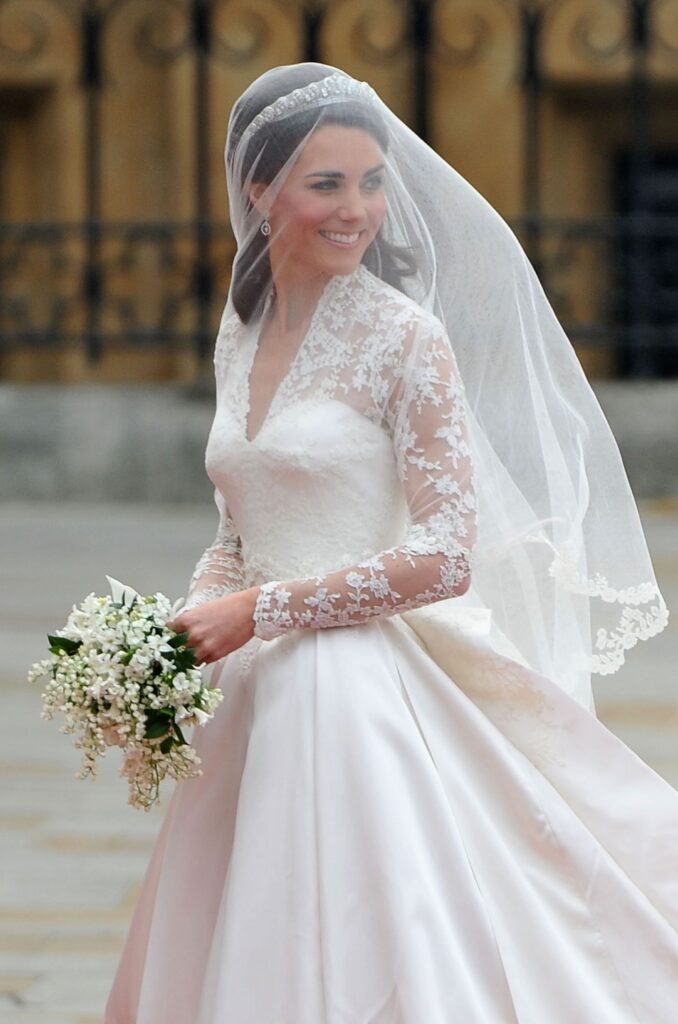
The 2011 wedding of Kate Middleton to Prince William came with immense expectation. The world anticipated a look that would respect royal tradition while speaking to a new generation.
Designed by Sarah Burton for Alexander McQueen, her gown achieved precisely that balance. Lace sleeves and a structured bodice referenced historic royal bridalwear, while clean lines and subtle detailing grounded the look firmly in the present.
Kate’s wedding resonated because it felt attainable. Grand, yes — but not intimidating. Elegant, yet modern.
Its cultural impact included:
- A resurgence of lace sleeves and classic silhouettes
- Renewed global interest in British couture
- A shift towards understated, refined wedding aesthetics
Kate Middleton’s bridal image reassured brides that tradition does not have to feel rigid. It can evolve without losing its meaning.
Meghan Markle: Redefining Royal Bridal Expectations
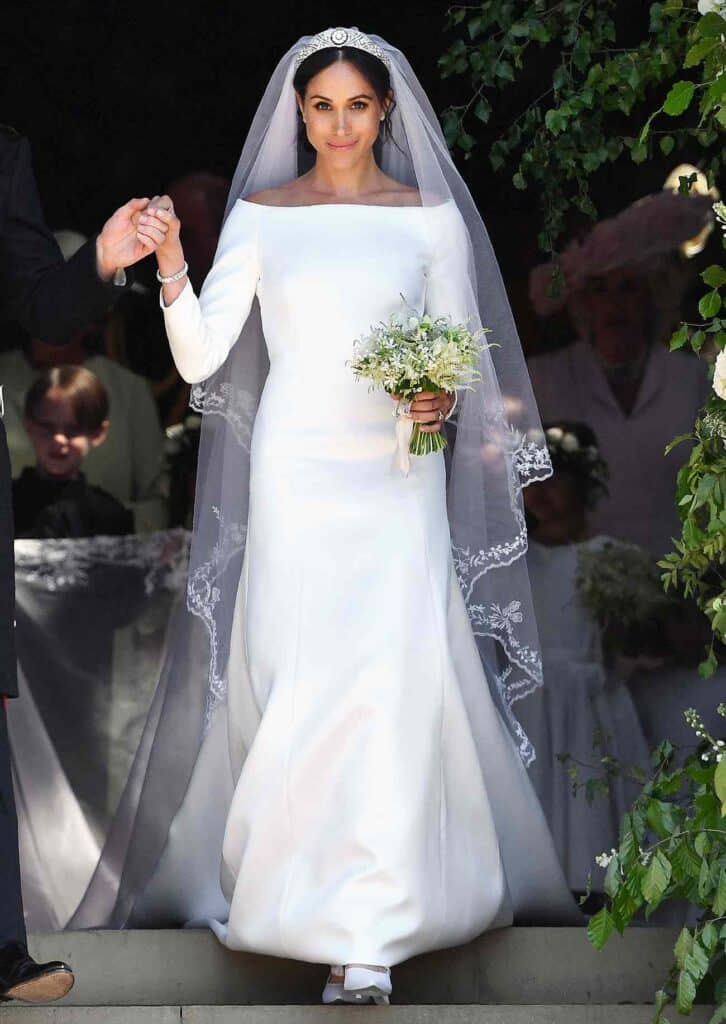
In contrast to ornate royal traditions, Meghan Markle chose radical simplicity for her 2018 wedding. Her Givenchy gown was minimalist to the point of defiance: no lace, no beading, no embellishment.
The message was clear. This was not about spectacle. It was about intention.
Meghan’s bridal choice reflected a modern understanding of power and identity. As a woman entering an ancient institution from outside it, she asserted autonomy through restraint.
Why it mattered to modern brides:
- It validated minimalist, contemporary bridal styles
- It prioritised personal identity over expectation
- It reframed bridal elegance as confidence, not decoration
For many women, Meghan’s wedding symbolised freedom — the freedom to choose meaning over performance.
Jacqueline Kennedy: Presence Over Perfection
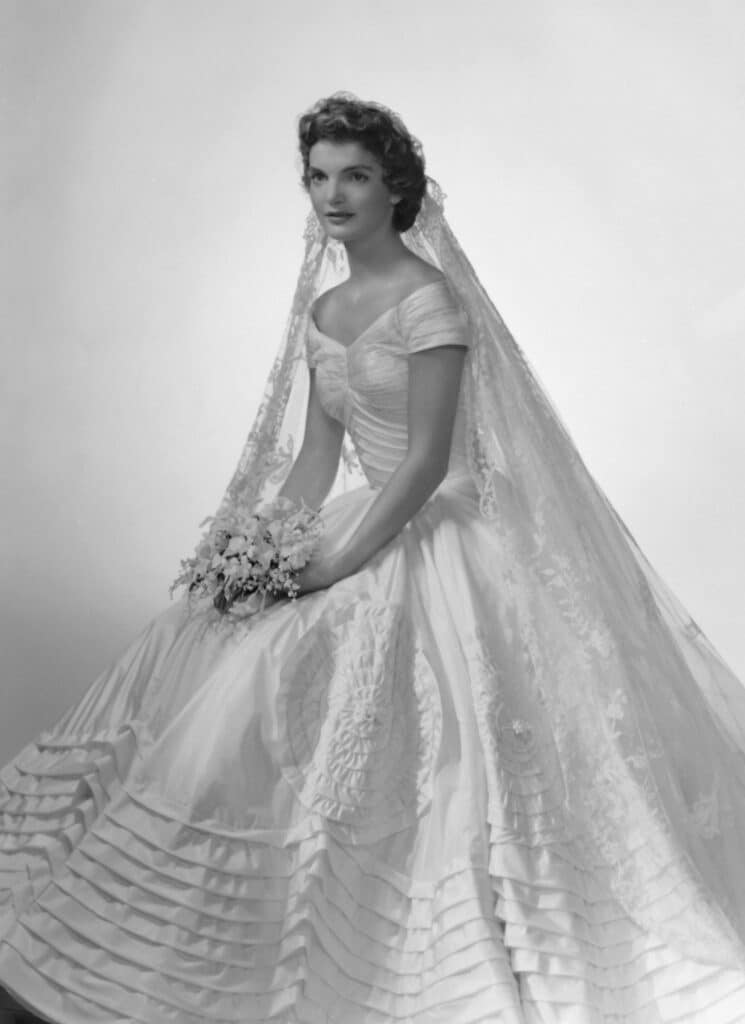
Long before “effortless chic” became a bridal ideal, Jacqueline Kennedy embodied it. Her 1953 wedding to John F. Kennedy featured a traditional silk taffeta gown, yet it was her overall presence that captivated the public.
Despite later admitting she disliked her dress, Jackie Kennedy became a bridal icon through her posture, composure, and quiet confidence. She demonstrated that a bride’s energy often leaves a stronger impression than her attire.
Her influence endures in the idea that elegance is not something worn — it is something carried.
Celebrity Brides as Cultural Mirrors
Not all influential brides were royal. Many celebrity weddings reflected shifting attitudes towards love, individuality, and social norms.
- Audrey Hepburn challenged convention with tea-length dresses, paving the way for non-traditional bridalwear
- Elizabeth Taylor normalised remarriage and evolving romantic narratives
- Victoria Beckham demonstrated how bridal style could mature alongside personal identity
These women showed that weddings are not static traditions. They adapt as society changes.
What Famous Brides Teach Today’s Brides
Across eras, cultures, and backgrounds, famous brides offer enduring lessons that remain relevant for modern weddings.
1. There Is No Single Ideal Bride
From dramatic grandeur to minimalist elegance, iconic brides prove that authenticity matters more than conformity.
2. Meaning Endures Longer Than Trends
While fashions fade, the emotional and cultural significance of a wedding lasts.
3. Confidence Shapes Perception
The most memorable brides wore their choices with conviction, not apology.
4. Weddings Reflect Identity
A wedding is not merely an event — it is a personal and cultural statement.
Why Famous Brides Still Matter
In an age dominated by social media, curated aesthetics, and algorithm-driven trends, famous brides continue to influence how women imagine their weddings. But their true relevance lies not in imitation.
They offer permission.
Permission to be traditional or unconventional.
Permission to be quiet or bold.
Permission to prioritise meaning over expectation.
Famous brides remind us that weddings are not performances designed for approval. They are deeply personal milestones that reflect who we are — and who we are becoming.
Every generation produces its iconic brides. Not because of status, wealth, or visibility, but because they capture something universal: the courage to step forward into a new chapter with intention.
That, ultimately, is what makes a bride truly unforgettable.