
The Poruwa ceremony is one of the most distinctive and meaningful traditions associated with a traditional Sinhalese wedding in Sri Lanka. More than a beautiful wedding ritual, it brings together family, blessings, symbolism, gratitude and cultural heritage as the bride and groom begin married life.
At the centre of the Poruwa ceremony is the Poruwa itself—a decorated elevated platform on which the couple takes part in a sequence of traditional rituals. The ceremony is generally conducted at carefully selected auspicious times, with elders and family members playing important roles throughout the proceedings.
For couples planning a traditional Sri Lankan wedding, understanding what happens on the Poruwa can make the experience even more meaningful. While individual customs can vary according to family traditions, region and personal preference, many of the core rituals continue to be preserved.
Here is a closer look at the meaning, sequence and traditions behind the Poruwa ceremony in Sri Lanka.
Read more on BrideSriLanka.com 👇🏼
What Is a Poruwa Ceremony?
A Poruwa ceremony is a traditional Sinhalese marriage ritual performed on an elevated ceremonial platform known as the Poruwa.
The Poruwa is usually made from wood and decorated with traditional motifs, flowers, greenery and ceremonial elements. Traditional versions may include four pillars, an overhead covering, lamps and punkalas—decorative pots associated with prosperity.
Rather than being simply a decorative stage, the Poruwa becomes the symbolic centre of the wedding ceremony.
It is here that the couple receives blessings, acknowledges parents and ancestors, exchanges symbolic gifts and performs rituals representing unity, prosperity and responsibility in married life.
For many couples, the Poruwa ceremony is also one of the most emotional moments of the wedding because close family members are actively involved.
The Meaning Behind the Poruwa
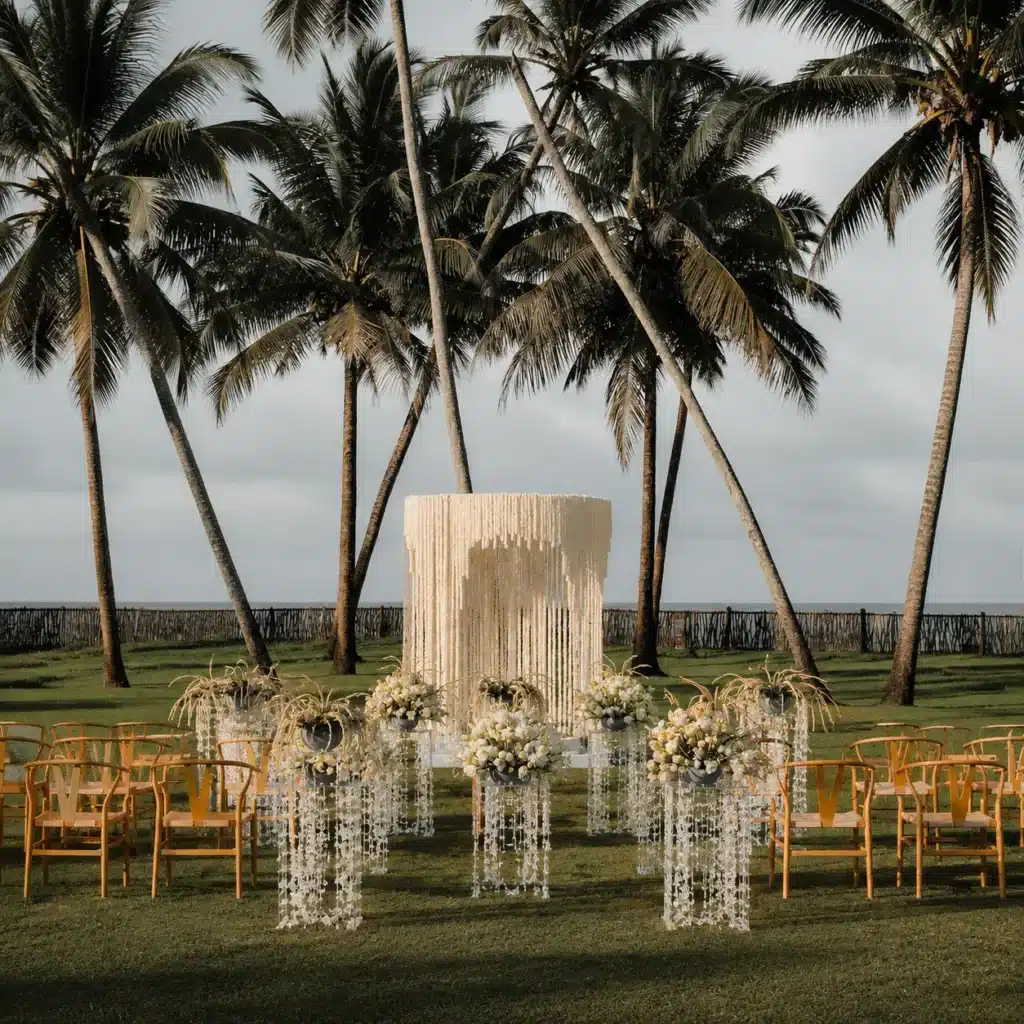
The symbolism of the Poruwa extends far beyond its appearance.
Traditional interpretations connect the platform with the home and family life that the bride and groom are beginning together. Grains, betel leaves, lamps, flowers and other ceremonial objects used around the Poruwa are associated with ideas such as prosperity, nourishment, protection and blessings.
The University of Sri Jayewardenepura’s discussion of the tradition notes that elements placed around the Poruwa have historically carried social and symbolic meanings connected with prosperity, family life and protection.
This is one reason the Poruwa ceremony remains important even at highly modern Sri Lankan weddings. Couples may choose contemporary décor, photography and reception styles while still preserving the traditional rituals on the Poruwa.
Auspicious Times Play an Important Role
Timing is an important element in many traditional Sri Lankan weddings.
The bride and groom may be instructed to step onto and leave the Poruwa at specific auspicious times. Traditionally, direction can also be taken into consideration when the couple begins the ceremony.
These timings are normally organised well before the wedding so that the wedding planner, photographer, Ashtaka reciter, family members and venue team understand the schedule.
Because the Poruwa ceremony often needs to begin at an exact time, couples should avoid leaving important preparations until the last minute.
Hair, makeup, dressing, photography and transport should all be planned around the ceremony timing.
Stepping Onto the Poruwa
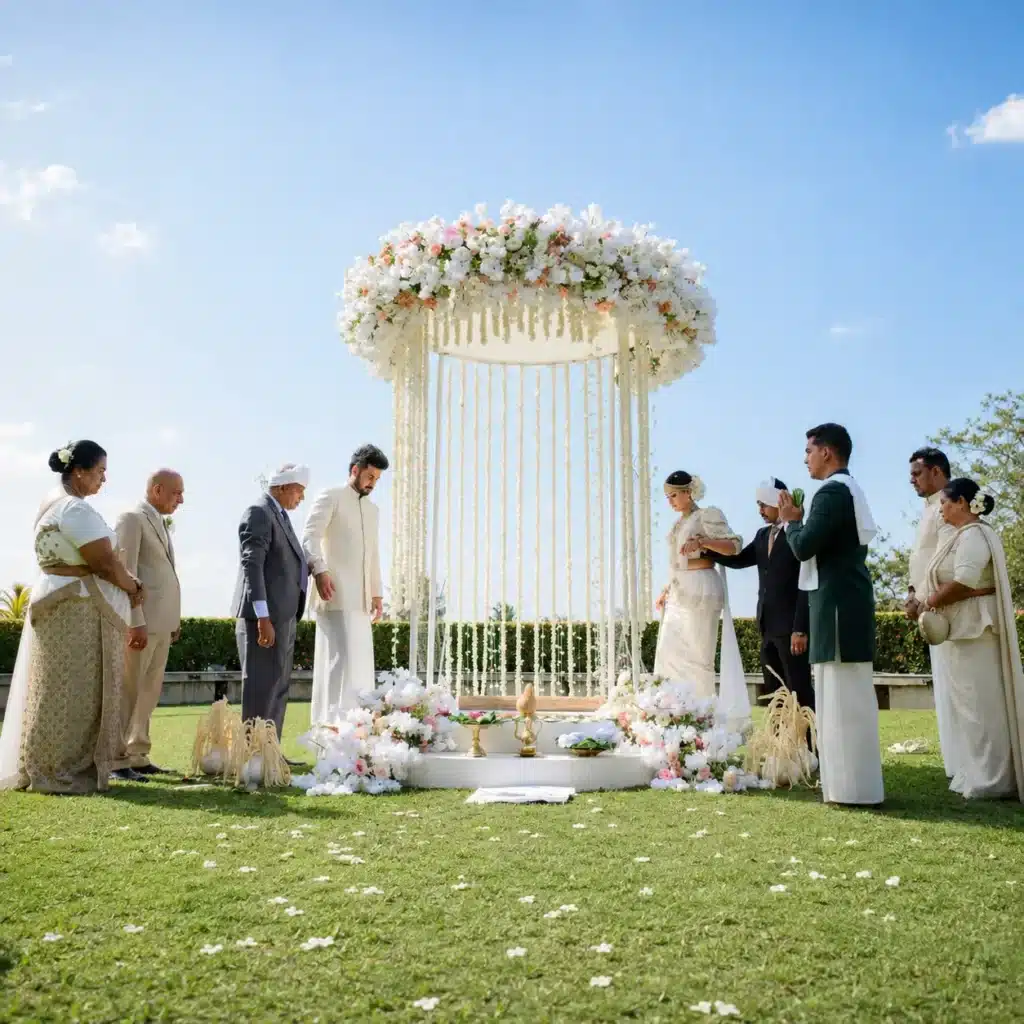
One of the first major moments occurs when the bride and groom are ceremonially guided onto the Poruwa.
Traditional accounts describe relatives or maternal uncles accompanying the couple, while other versions of the ceremony may involve parents or respected elders. The precise arrangement can vary between families.
Traditional drums and the sound of the conch shell may accompany the couple’s entrance, giving the moment a ceremonial and celebratory atmosphere.
For photographers, this is also an important moment to capture because the couple’s entrance onto the Poruwa marks the formal beginning of the traditional proceedings.
The Role of the Ashtaka
The Poruwa ceremony is traditionally guided by a person knowledgeable in the customs and ritual sequence.
An important part of the ceremony involves the recitation of Ashtaka—traditional verses associated with blessings for the couple. The University of Sri Jayewardenepura describes Ashtaka as stanzas recited during the Poruwa rites to invoke blessings upon the newly married couple.
The individual conducting this part of the ceremony helps ensure that each ritual takes place in the appropriate order.
Couples planning their wedding should therefore choose someone experienced in traditional Poruwa customs rather than treating the role as simply ceremonial entertainment.
Offering Betel Leaves
Betel leaves play a significant role in Sri Lankan culture and appear repeatedly during the Poruwa ceremony.
They are traditionally associated with respect, hospitality, relationships and ceremonial occasions.
Different parts of the ritual may involve the offering, exchanging or placing of betel leaves. Some traditions include seven sets connected symbolically with previous generations and gratitude to ancestors.
This reflects an important theme running throughout the ceremony: a marriage does not exist in isolation. It represents the joining of two individuals while acknowledging the families and generations that came before them.
The Exchange of Rings and Jewellery
Many contemporary Poruwa weddings include an exchange of wedding rings.
The groom may also place a necklace around the bride’s neck as another symbolic gesture within the ceremony. Some traditional versions include the gifting of clothing or a saree as part of the groom’s responsibility towards his bride.
The exact items used today vary widely.
Some couples follow an elaborate traditional sequence, while others simplify the Poruwa ceremony and incorporate only the elements that are personally meaningful to them.
This flexibility allows couples to preserve heritage while still creating a wedding that reflects their own style.
Tying the Little Fingers
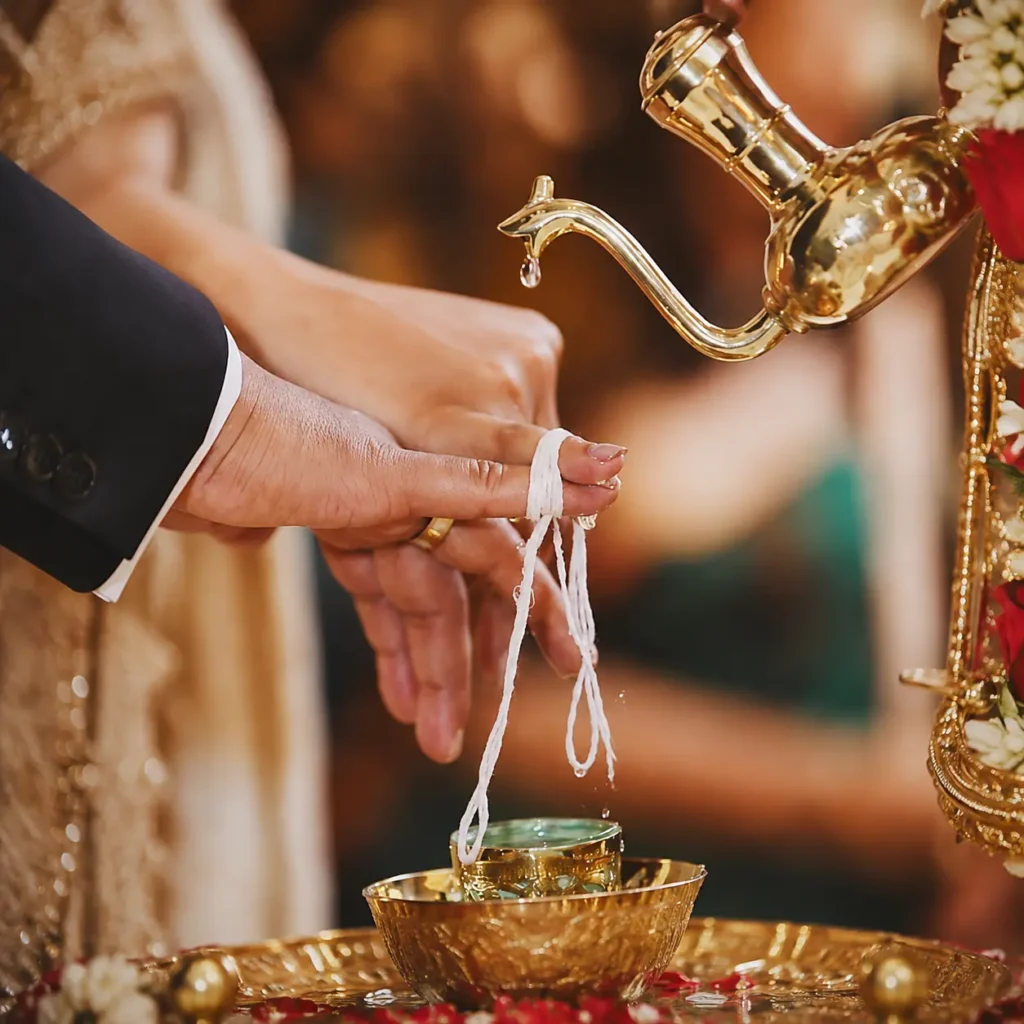
One of the most recognisable rituals of the Poruwa ceremony is the joining of the bride’s and groom’s little fingers.
The fingers are traditionally tied together using a sacred or golden thread. Water is then poured over the joined fingers by an elder, such as the bride’s father or uncle, depending on the family’s chosen tradition.
This ritual represents the union and bond between husband and wife.
The flowing water has also traditionally been interpreted as a symbol of life, continuity and abundance.
Visually and emotionally, this often becomes one of the most powerful moments of the entire wedding ceremony.
The Jayamangala Gatha
Another beautiful part of the Poruwa ceremony is the recital of the Jayamangala Gatha.
These benedictory verses are traditionally sung or recited to invoke blessings for the couple as they begin married life. In many weddings, a group of young girls dressed in traditional attire performs the verses.
The soft chanting combined with traditional décor, flowers and ceremonial dress creates a deeply atmospheric moment.
Couples should coordinate this part carefully with their wedding planner and sound team so that the chanting can be heard clearly without being overwhelmed by background music.
Honouring the Bride’s Mother
One of the most touching rituals recognises the bride’s mother and the care she has given her daughter.
Traditionally, the groom presents a white cloth known as the kiri kachchiya or a similar ceremonial cloth to the bride’s mother. This act symbolises gratitude for nurturing and raising the bride.
The ritual is particularly meaningful because it moves the Poruwa ceremony beyond the bride and groom themselves.
Parents and elders are recognised as part of the couple’s journey into marriage.
This can become an especially emotional moment for the bride’s family and deserves time within the ceremony rather than being rushed.
Paying Respect to Parents and Elders
Respect for parents, relatives and previous generations runs throughout traditional Sri Lankan wedding customs.
Betel may be presented to parents and elders as a gesture of gratitude and respect. Traditional interpretations also connect particular offerings with remembrance of earlier generations.
For today’s couples, this part of the Poruwa ceremony provides an opportunity to recognise the people who supported them throughout their lives.
Families may also adapt the ritual to honour grandparents, guardians or other significant elders.
Stepping Down from the Poruwa
Just as entering the Poruwa is carefully timed, leaving it can also take place at an auspicious moment.
Once the rituals are complete, the couple is guided down from the platform.
Traditionally, a coconut is broken as the bride and groom step down. The act is associated with removing misfortune and invoking blessings as they begin the next stage of married life.
Traditional drumming often accompanies the moment.
The conclusion of the Poruwa ceremony therefore feels celebratory rather than simply formal—the couple leaves the platform together and moves forward into the rest of the wedding celebration.
Does Every Poruwa Ceremony Follow the Same Order?
No.
One of the most important things couples should understand is that the precise rituals and order can vary.
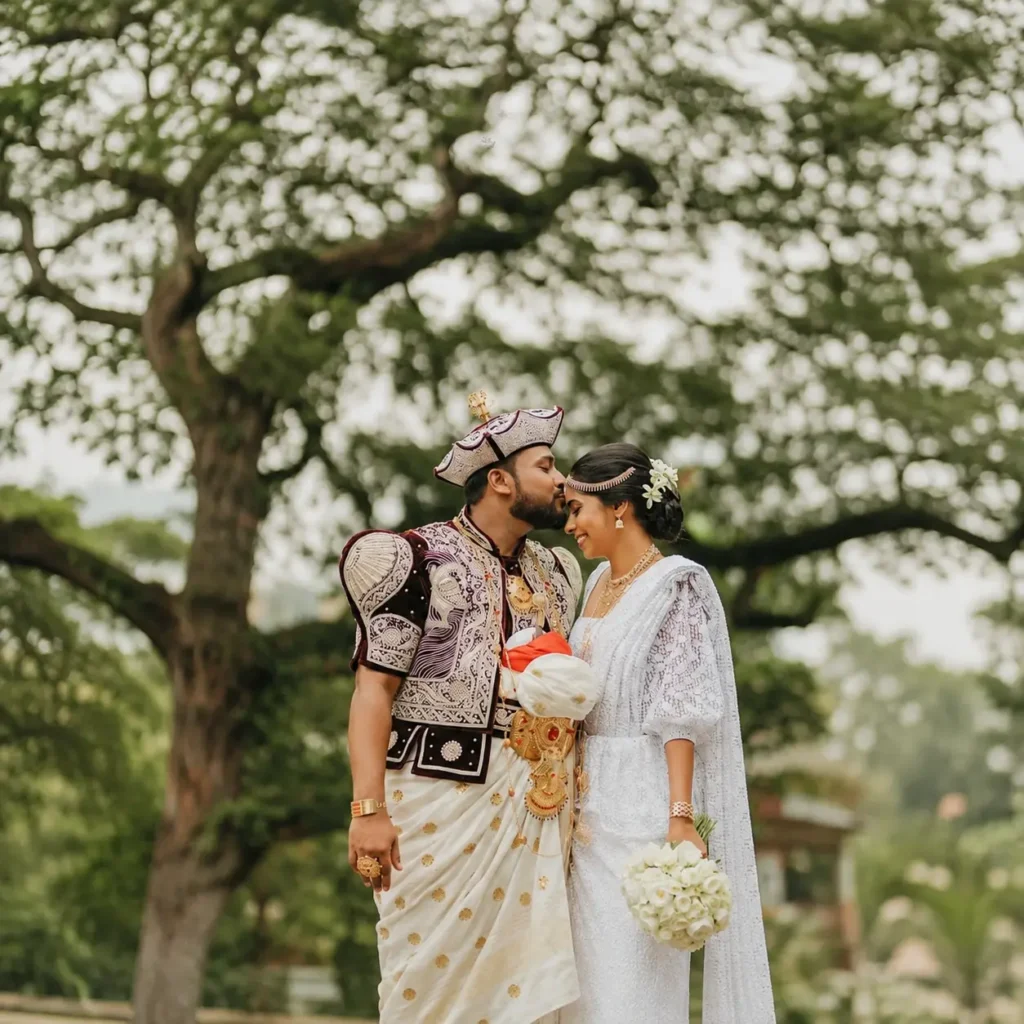
The University of Sri Jayewardenepura notes that Poruwa traditions have changed over generations, while modern ceremonies often incorporate Western elements such as rings, veils and different styles of wedding attire. Explore Sri Lanka similarly notes that present-day customs and their sequence can differ.
Family traditions, Kandyan and low-country influences, personal preferences and available auspicious times may all affect the final sequence.
Rather than copying another wedding exactly, couples should discuss their preferred Poruwa ceremony with experienced elders and the person conducting the rituals.
Planning a Poruwa Ceremony for a Modern Wedding
A traditional ceremony can work beautifully within a modern wedding.
The key is thoughtful coordination.
Before the wedding, confirm:
- The auspicious time for stepping onto the Poruwa
- The auspicious time for stepping down
- Who will conduct the rituals
- Which relatives need to participate
- Who is responsible for ceremonial items
- Whether Jayamangala Gatha will be included
- Whether traditional drummers are required
- Which gifts, cloths, jewellery or betel arrangements are needed
- Where photographers and videographers should stand
- How much time the ceremony requires
A rehearsal or detailed briefing is particularly useful when family members are unfamiliar with the sequence.
Choosing the Poruwa Design
Modern couples have countless design possibilities.
A Poruwa may feature:
- Traditional carved wood
- White florals
- Jasmine-inspired arrangements
- Coconut or palm elements
- Lotus motifs
- Brass lamps
- Kandyan-inspired details
- Minimal ivory décor
- Contemporary floral arches
However, décor should complement rather than overwhelm the ritual.
The Poruwa ceremony already contains many visually meaningful elements, so an elegant design often works better than excessive decoration.
Consider your venue, wedding colours and bridal attire when deciding on the final appearance.
Photographing the Poruwa Ceremony
Speak to your photographer beforehand about the key rituals.
Important moments include:
- Entering the Poruwa
- Exchanging rings
- Placing the necklace
- Joining the little fingers
- Pouring water
- Jayamangala Gatha
- Honouring parents
- Exchanging betel
- Stepping down
- Breaking the coconut
These moments happen quickly, and some cannot easily be repeated.
An experienced wedding photographer should understand the structure of a Poruwa ceremony and position themselves without interfering with the rituals.
Keeping the Tradition Meaningful
Couples sometimes become so focused on décor, photographs and schedules that the meaning behind the ceremony is forgotten.
Before the wedding, spend some time understanding the rituals you have chosen.
Ask parents and grandparents about your family’s traditions. Speak with the person conducting the ceremony. Learn what the symbolic gestures mean.
When you understand why each action takes place, the Poruwa ceremony becomes far more than something performed for tradition or photographs.
It becomes part of your own wedding story.
The Poruwa ceremony remains one of Sri Lanka’s most beautiful expressions of marriage, family and cultural heritage.
From stepping onto the decorated platform at an auspicious moment to receiving blessings, exchanging symbolic gifts, joining hands and honouring parents, every stage carries meaning.
Modern weddings may look very different from those of previous generations, and the exact customs continue to evolve. Yet the heart of the tradition remains remarkably powerful: two people beginning married life surrounded by the families, blessings and heritage that helped shape them.
For couples who choose to include a Poruwa ceremony, understanding these rituals allows them to preserve tradition thoughtfully while creating a celebration that still feels personal, elegant and relevant to their own love story.
Read more👇🏼