
Among Sri Lanka’s diverse cultural mosaic, the Malay Muslim community holds a unique place — blending influences from Sri Lankan, South Indian, Arab, and Southeast Asian traditions. Their weddings are a reflection of this rich fusion: elegant, modest, and deeply spiritual. For a Malay Muslim bride, her wedding day is more than a celebration — it is a sacred covenant, marked by rituals that honour faith, family, and heritage.
This article explores the journey of a Malay Muslim bride — from pre-wedding customs to the beauty of the Nikah ceremony, her attire, jewellery, and the graceful traditions that define her wedding day.
The Sacred Union: The Nikah Ceremony

The heart of any Muslim wedding is the Nikah, the religious ceremony that solemnizes the marriage under Islamic law. The Nikah is not merely a celebration — it is a spiritual contract (aqd) between the bride and groom, witnessed by their families and officiated by an imam or moulavi.
During the ceremony, the groom formally offers the mahr (dowry) — a symbolic gift that signifies his commitment and respect. The bride’s guardian (wali) represents her in accepting the offer, as prescribed by Islamic practice. Once the qazi or moulavi recites the Khutbah Nikah (sermon), the marriage is officially recognized.
While the Nikah is primarily religious, Malay Muslim families often add cultural touches — from traditional greetings like Salam Pengantin to decorative floral setups, pastel drapes, and the exchange of garlands inspired by Sri Lankan influence.
Pre-Wedding Traditions: Preparing for the Union
Before the Nikah, a series of rituals take place to prepare the bride for her new journey. These customs, though rooted in Islamic principles, carry Malay cultural flavour and local charm.
1. The Bertunang (Engagement)

The Bertunang marks the official engagement. Families exchange symbolic gifts such as sweets, fabric, and jewellery. This ceremony signifies mutual consent and sets the tone for the wedding arrangements. Malay brides often wear simple baju kurung or pastel sarees for this occasion.
2. The Berinai or Henna Night

Comparable to the Mehendi night in other South Asian cultures, the Berinai is an intimate and joyous celebration. Friends and family gather as henna is applied to the bride’s hands and feet — symbolizing blessings, beauty, and protection from the evil eye.
Malay brides often wear shades of gold, maroon, or emerald green for the Berinai, accompanied by soft floral headpieces. Traditional ghazal or nasheed songs may be played, creating a serene yet festive ambiance.
3. Khatam Al-Quran (Completion of Quran Reading)

A significant spiritual ritual is the Khatam Al-Quran, where the bride completes her recitation of the Holy Quran. It signifies purity and readiness for her new role as a wife. The event is usually private, attended by close female relatives, who bless her with prayers and gifts.
The Wedding Day: Elegance Meets Modesty
On her wedding day, the Malay Muslim bride embodies grace and modesty. Her attire reflects both faith and fashion — blending Malay tradition with modern sophistication.
The Bridal Attire
Most Malay Muslim brides wear the Baju Kurung or Baju Kebaya, traditional Malay garments known for their modest elegance. The Baju Kurung features a long tunic paired with a sarong or long skirt, while the Baju Kebaya is more form-fitting with lace embroidery.

In Sri Lanka, some brides choose to wear sarees with hijabs, combining Sri Lankan and Malay aesthetics. Soft pastel tones like cream, gold, blush pink, or ivory are popular, though some prefer deep jewel tones for evening ceremonies.
The Veil and Hijab
The tudung or hijab completes the bridal look. It is often styled elegantly with lace detailing, pearls, or sequined edges. Some brides wear a long veil (tudung labuh) over their hijab for a regal touch, ensuring the overall look remains modest yet luxurious.
The Wedding Crown – Sanggul Lintang

An iconic part of the Malay bridal look is the Sanggul Lintang, a traditional crown-like headpiece adorned with gold or silver motifs. Though less common today, it remains a beloved heritage accessory, symbolizing beauty, honour, and cultural pride.
The Jewellery: Symbolism in Gold
Malay Muslim bridal jewellery reflects both faith and heritage. Gold dominates the collection — a sign of prosperity and blessings. Common pieces include:
- Necklaces (rantai leher) – Often intricate, layered gold designs that complement the modest neckline.
- Earrings (subang) – Small, elegant, and often floral-themed.
- Bracelets and Bangles (gelang) – Worn in sets, symbolizing unity and happiness.
- Rings (cincin) – The engagement and wedding rings hold deep sentimental value.
Some modern brides opt for minimalist jewellery to match contemporary fashion trends, while others embrace heirloom pieces passed down through generations — keeping family legacy alive.
The Reception: Majlis Bersanding
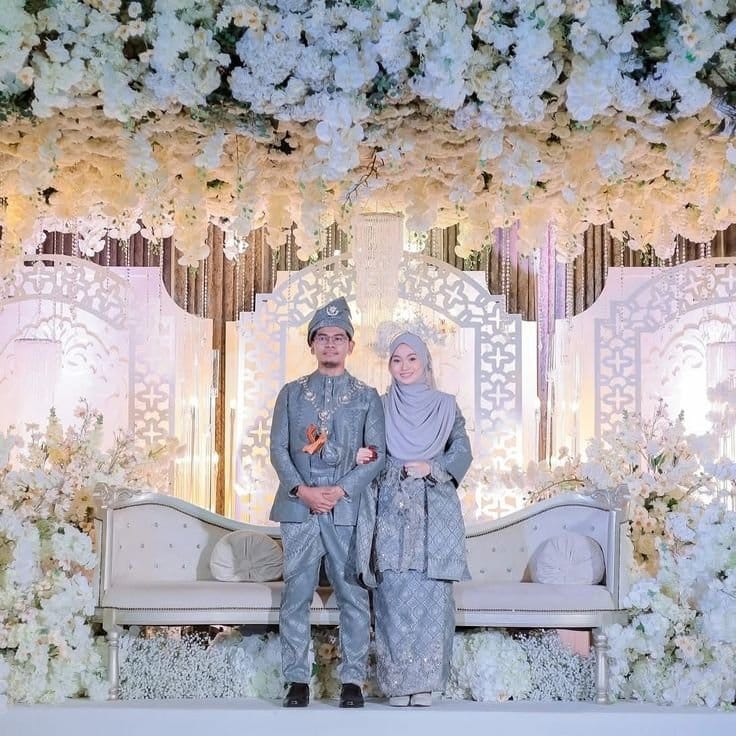
After the Nikah, the wedding reception — known as Majlis Bersanding — takes place. It is the public celebration of the union, often featuring cultural performances, blessings, and a grand feast.
The Bersanding Throne
At the centre of the event is the pelamin, a beautifully decorated dais or throne where the bride and groom sit as Raja Sehari — “King and Queen for the day.” Guests offer blessings, photos are taken, and the couple receives gifts.
The Feast – Hidangan Pengantin
Food plays a vital role in Malay Muslim weddings. Traditional dishes such as nasi minyak, rendang, ayam masak merah, and sweets like kuih lapis are served. The feast symbolizes abundance and community — celebrating the joy of togetherness.
Post-Wedding Customs: A New Chapter
After the celebrations, the bride moves to her husband’s home, marking the beginning of a new phase. Malay Muslim families often hold a walimah — a smaller, religiously significant feast to announce and bless the marriage within the community.
Respect, faith, and love form the foundation of this new journey. The Malay Muslim bride transitions gracefully from daughter to wife, carrying her faith and culture with dignity.
Modern Touches, Timeless Spirit
While many Malay Muslim weddings today incorporate modern fashion trends and décor, the essence of the tradition remains. Brides blend modern silhouettes with modesty, host weddings in elegant halls or heritage homes, and document their ceremonies with professional photography — but the heart of the ritual still lies in faith, family, and love.
From the poetic simplicity of the Nikah to the grandeur of the Bersanding, Malay Muslim weddings continue to inspire with their balance of beauty, spirituality, and culture.
Final Thoughts
The Malay Muslim bride is a symbol of elegance rooted in faith. Every element — from her attire and jewellery to the rituals she observes — reflects a story that has been told for generations. It’s a celebration not just of love, but of identity, devotion, and heritage that continues to shine through every Malay Muslim wedding in Sri Lanka.