
Modest bridal fashion for Muslim brides has evolved into a space where faith, femininity, and contemporary design meet with confidence and creativity. Today’s modest bridal trends are no longer about limitation; they are about thoughtful design choices that honour Islamic values while embracing elegance, individuality, and luxury. From hijab-friendly wedding dresses with refined silhouettes to richly embellished fabrics and versatile detachable elements, Muslim brides now have access to styles that feel both respectful and aspirational. Designers are increasingly recognising the importance of coverage, comfort, and cultural expression, crafting gowns that allow brides to feel fully themselves on their wedding day. These trends celebrate modesty not as a constraint, but as a powerful aesthetic—one that blends tradition, craftsmanship, and modern bridal sensibilities into a timeless and deeply personal wedding look.
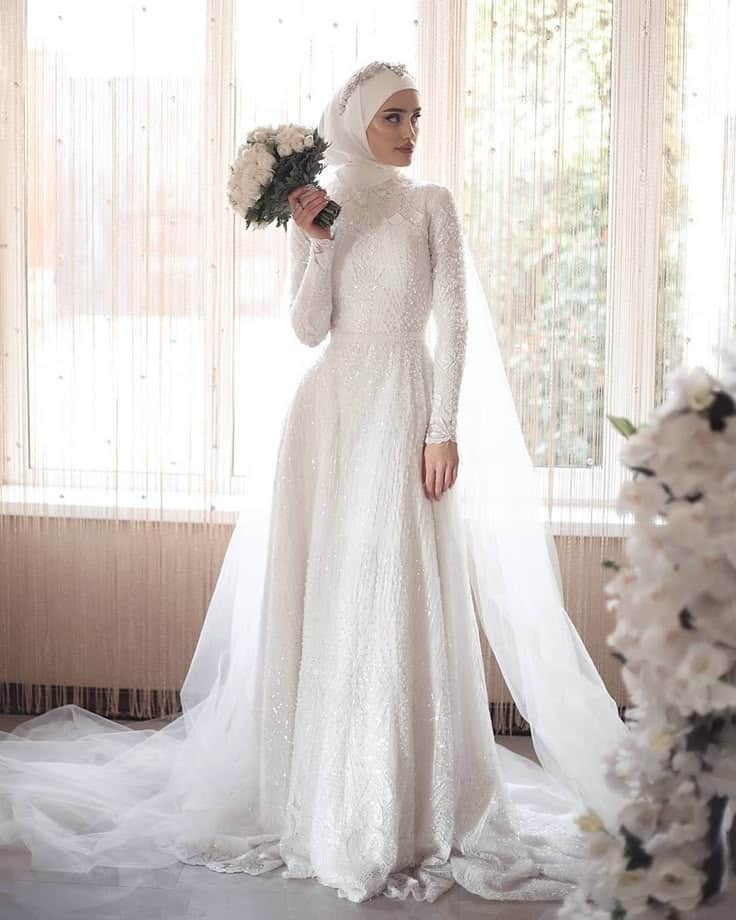
01.Hijab-Friendly Wedding Dresses:
Wedding dresses designed with hijab-friendly features, such as higher necklines, long sleeves, and ample coverage, to accommodate the wearing of a hijab (headscarf) without compromising style or elegance.
These dresses may include detachable sleeves or jackets for added coverage during the ceremony and can be customized to suit individual preferences.
02.Modest Necklines and Sleeves:
Modest wedding dresses often feature higher necklines, such as boat necks, scoop necks, or illusion necklines, to provide coverage while maintaining a modern and sophisticated look.
Long sleeves, three-quarter sleeves, or sheer sleeves with lace or embellishments are popular choices for Muslim brides seeking modesty without sacrificing style.
03.Luxurious Fabrics and Embellishments:
Muslim brides often opt for wedding dresses crafted from luxurious fabrics such as silk, satin, lace, or chiffon, which drape gracefully while providing modest coverage.
Embellishments such as beading, embroidery, lace appliqués, and intricate detailing add a touch of elegance and sophistication to modest wedding gowns.
04.Detachable Overskirts and Capes:
Detachable overskirts or capes are a trendy addition to modest wedding dresses, allowing brides to create different looks for the ceremony and reception.
These versatile pieces add drama and flair to the wedding ensemble while providing additional coverage during the ceremony.
05.Modest Bridal Separates:
Bridal separates, such as skirts paired with matching tops or blouses, offer Muslim brides the flexibility to mix and match pieces while maintaining modesty.
This trend allows brides to customize their wedding look according to their personal style preferences and cultural traditions.
06.Embellished Hijabs and Headpieces:
Embellished hijabs or headpieces adorned with pearls, crystals, lace, or floral appliqués are popular choices for Muslim brides looking to accessorize their wedding attire.
These statement pieces add a touch of glamour and sophistication to the bridal ensemble while complementing the overall look.
07.Modest Bridal Veils and Mantillas: Muslim brides
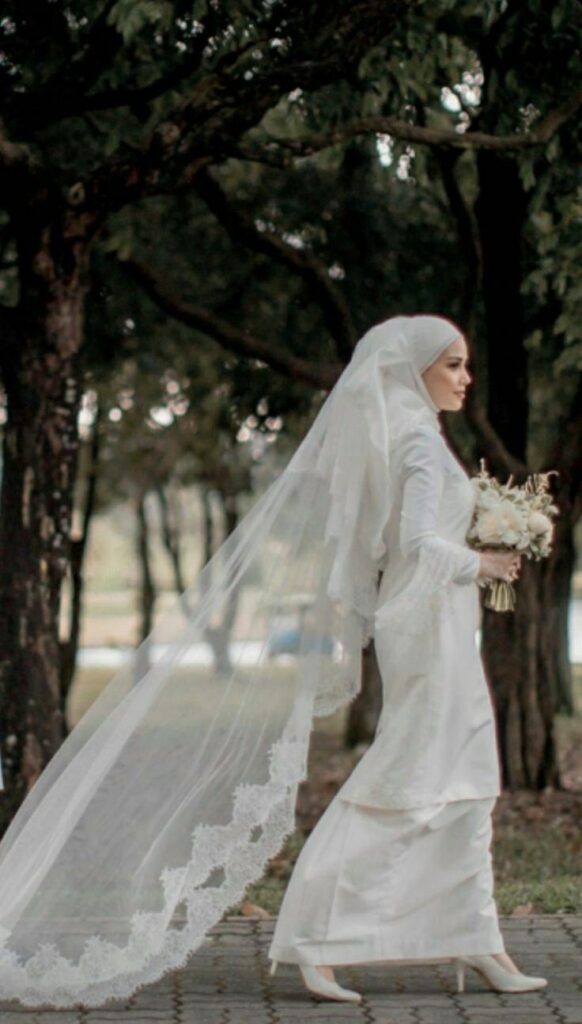
Bridal veils or mantillas crafted from sheer fabrics such as tulle or lace provide an elegant and romantic finishing touch to modest wedding attire.
These accessories can be styled in various ways to suit individual preferences while adding a touch of tradition and sophistication to the bridal look.
08.Cultural Influences and Traditional Elements:
Muslim brides often incorporate cultural influences and traditional elements into their wedding attire, such as intricate embroidery, traditional motifs, or embellishments that reflect their heritage and background.
These cultural elements add a unique and personalized touch to the bridal ensemble, celebrating the bride’s cultural identity and heritage.
Ultimately, modest bridal fashion for Muslim brides is about choice, intention, and self-expression. Whether a bride gravitates towards classic silhouettes with long sleeves, contemporary separates, or dramatic overskirts and capes, the unifying theme is balance—between modesty and modernity, tradition and personal style. Embellished hijabs, elegant veils, and culturally inspired details further elevate the bridal ensemble, transforming it into a meaningful reflection of identity and heritage. As modest fashion continues to gain global recognition, Muslim brides are increasingly empowered to define beauty on their own terms. These trends affirm that a bridal look can be modest, luxurious, and fashion-forward all at once—proving that elegance rooted in faith and culture can be just as striking, memorable, and celebratory as any other bridal style.