
Tamil Catholic weddings in Sri Lanka are among the most graceful and symbolic unions — where sacred Christian rituals meet the quiet depth of Tamil culture. For the Tamil Catholic bride, her wedding is not only a personal milestone but a celebration of faith, family, and heritage. From the serene church ceremony to the carefully chosen gown and heirloom jewellery, every element carries meaning and devotion.
A Blend of Faith and Culture
Tamil Catholics form a vibrant community in Sri Lanka, particularly along the northern and eastern coasts, as well as in parts of Negombo and Colombo. Their weddings are rooted in the Roman Catholic faith yet beautifully infused with Tamil cultural values.
While the ceremony takes place in a church before a priest, Tamil Catholic families often incorporate pre-wedding customs that echo the wider Tamil heritage — celebrating both their identity and devotion. The result is a union where faith and culture coexist in harmony.
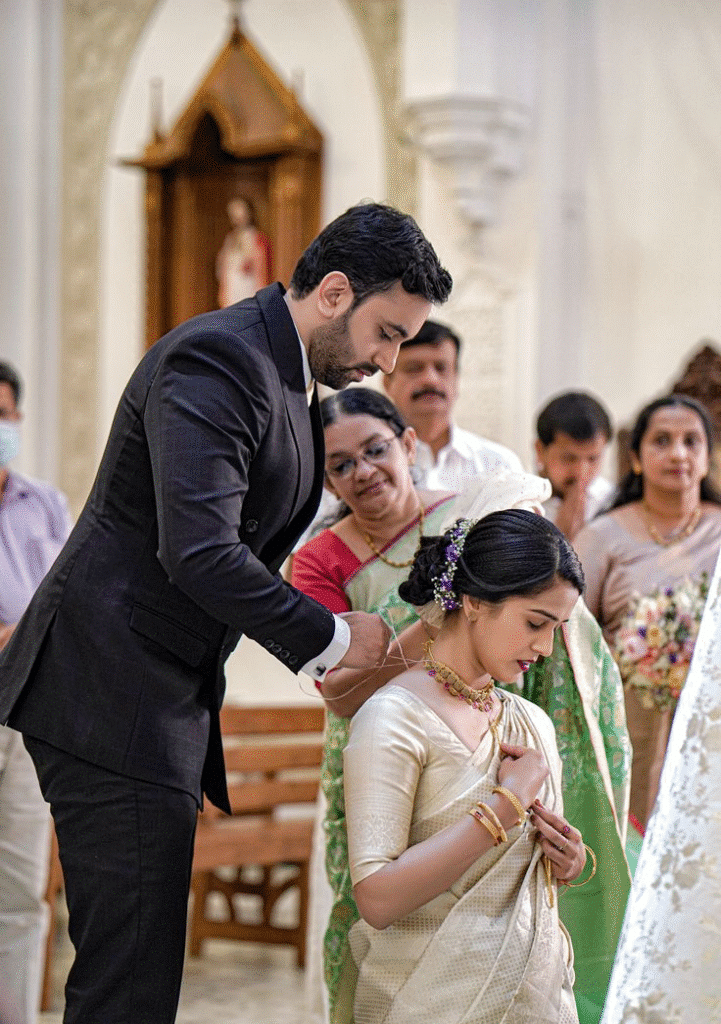
Pre-Wedding Traditions and Ceremonies
Before the grand church wedding, Tamil Catholic families observe several preparatory rituals that blend family blessings and community customs.
1. The Engagement (Nichyathartham)
The engagement ceremony, known as Nichyathartham, is often hosted at the bride’s home or a church hall. It marks the formal agreement between the two families. Rings may be exchanged, and the priest blesses the couple. This event is filled with prayer, songs, and traditional Tamil sweets shared with relatives.
2. The Bridal Shower and Blessing
A pre-wedding gathering is often held among women in the family and close friends. Here, the bride receives blessings, small gifts, and words of wisdom for her new journey. Hymns and Tamil devotional songs may be sung.
3. Family Prayer and Home Blessing
A day or two before the wedding, families hold a novena or special prayer at home. A statue of the Virgin Mary or a cross is placed at the center, surrounded by flowers and candles. This is a deeply emotional time when elders bless the bride and groom for a strong and faithful marriage.
The Wedding Day: A Sacred Celebration
On the wedding day, the Tamil Catholic bride steps into her role as both a woman of faith and elegance. Every detail of her attire and ceremony is planned with meaning.
The Bridal Gown
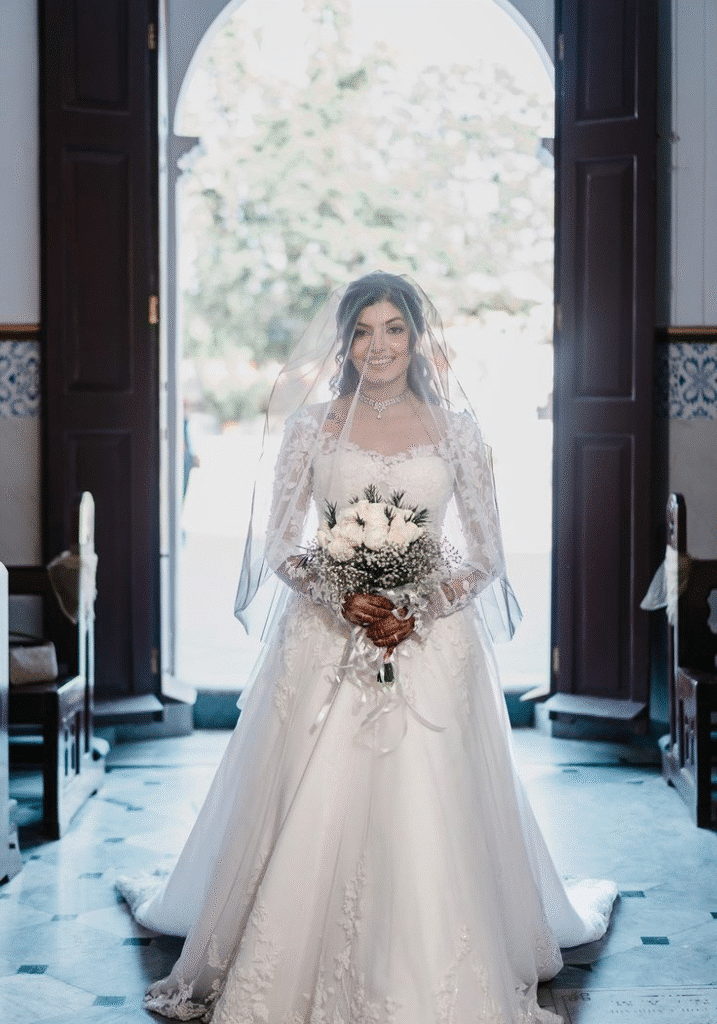
Unlike traditional Tamil Hindu brides who wear silk sarees, Tamil Catholic brides traditionally wear a white wedding gown. The gown is often designed with delicate lace, satin, or chiffon, inspired by Western bridal fashion yet tailored with modesty in mind.
In recent years, many Tamil Catholic brides add subtle cultural details — lace patterns inspired by local craftsmanship, or even a silk overlay to honor Tamil textile artistry.
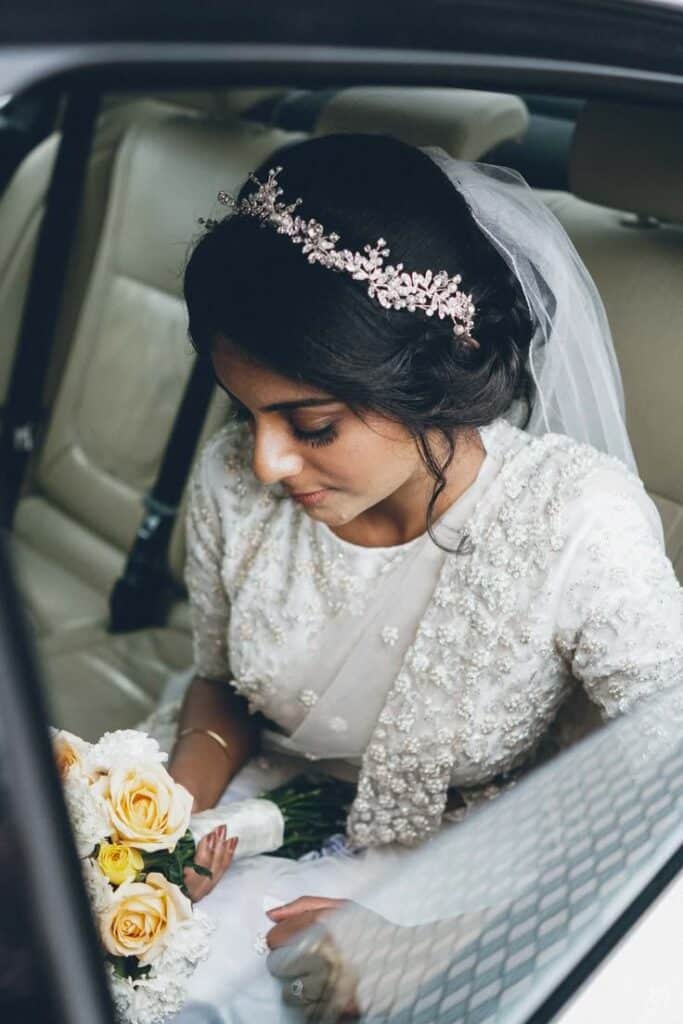
The white color represents purity and faith, while the gown’s veil symbolizes humility before God.
Jewellery and Accessories
While understated compared to Hindu bridal adornment, Tamil Catholic brides wear elegant jewellery with symbolic touches:
- Cross pendant or chain: A sign of faith and devotion.
- Pearls or gold jewellery: Often gifted by parents, representing blessings and prosperity.
- Earrings and bangles: These may be modern or heirloom pieces passed down through generations.
- Engagement ring and wedding band: Blessed during the ceremony and worn daily thereafter.
In Tamil Catholic culture, jewellery is not about grandeur but grace — each piece meant to complement the purity of the occasion.
The Bridal Bouquet and Veil
A fresh bouquet of white or pastel flowers completes the ensemble. Roses, lilies, or jasmine are popular, symbolizing love, purity, and the fragrance of devotion. The veil, blessed by the priest or a family elder, is often placed by the bride’s mother — marking the emotional moment she entrusts her daughter to a new chapter.
The Church Ceremony
The heart of a Tamil Catholic wedding is the Holy Nuptial Mass, held at a beautifully adorned church.
1. Procession and Entrance
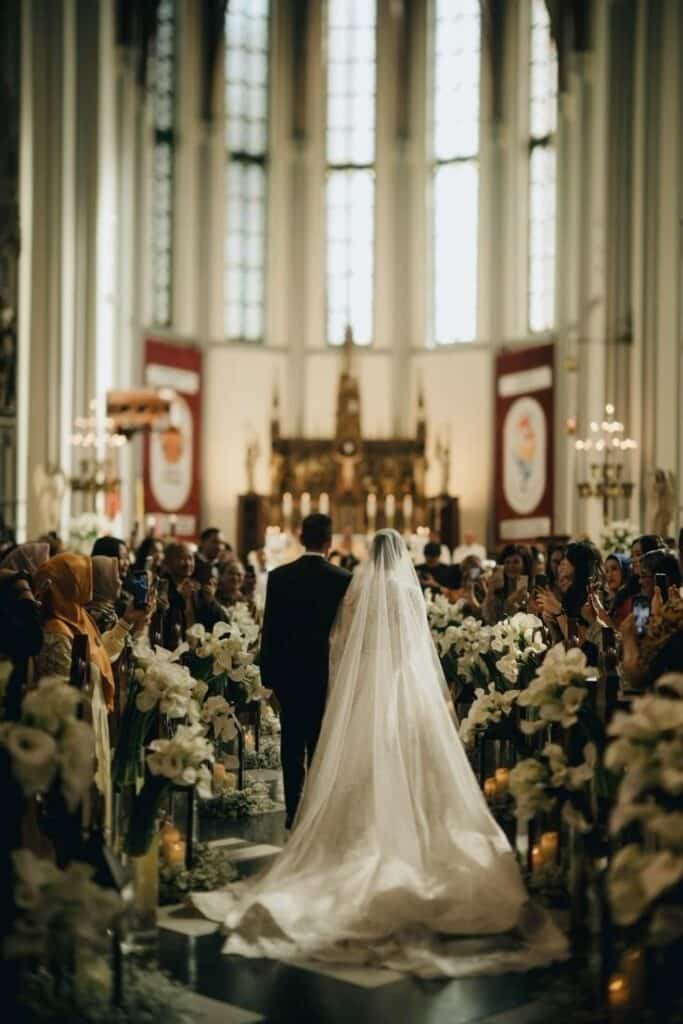
As church bells ring, the groom waits at the altar. The bride walks down the aisle on her father’s arm, accompanied by a choir singing hymns such as “Ave Maria” or “Here Comes the Bride.” This moment captures reverence and emotion as the congregation rises to greet the couple.
2. Exchange of Vows and Rings
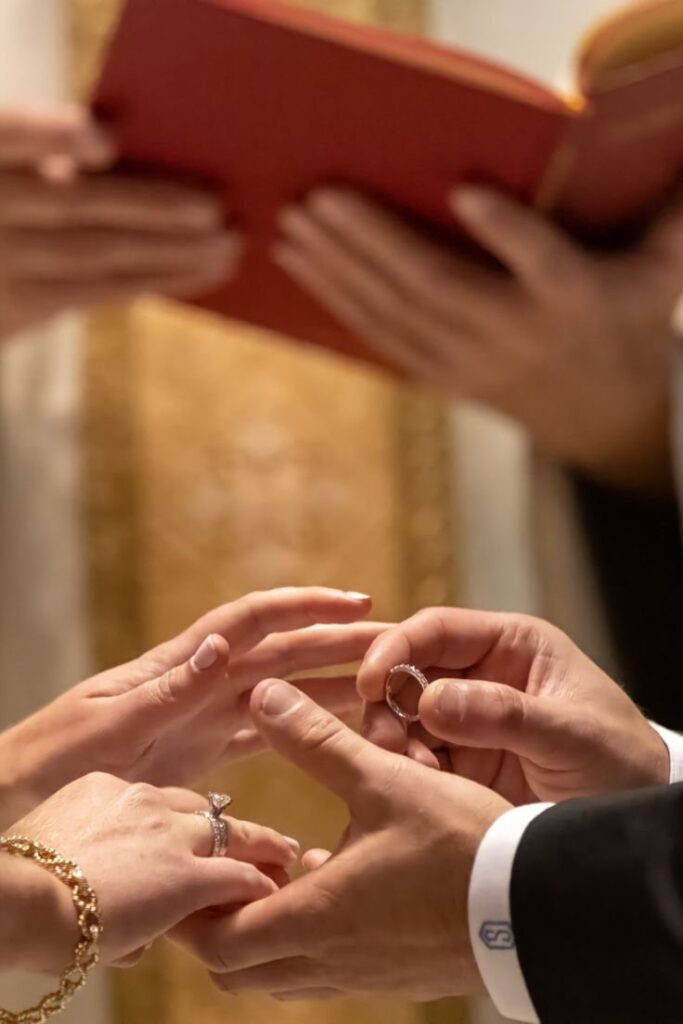
The priest leads the couple through sacred vows, asking them to promise love, fidelity, and faithfulness in God’s presence. The rings are blessed with holy water and exchanged, sealing the sacrament of marriage.
3. The Nuptial Blessing
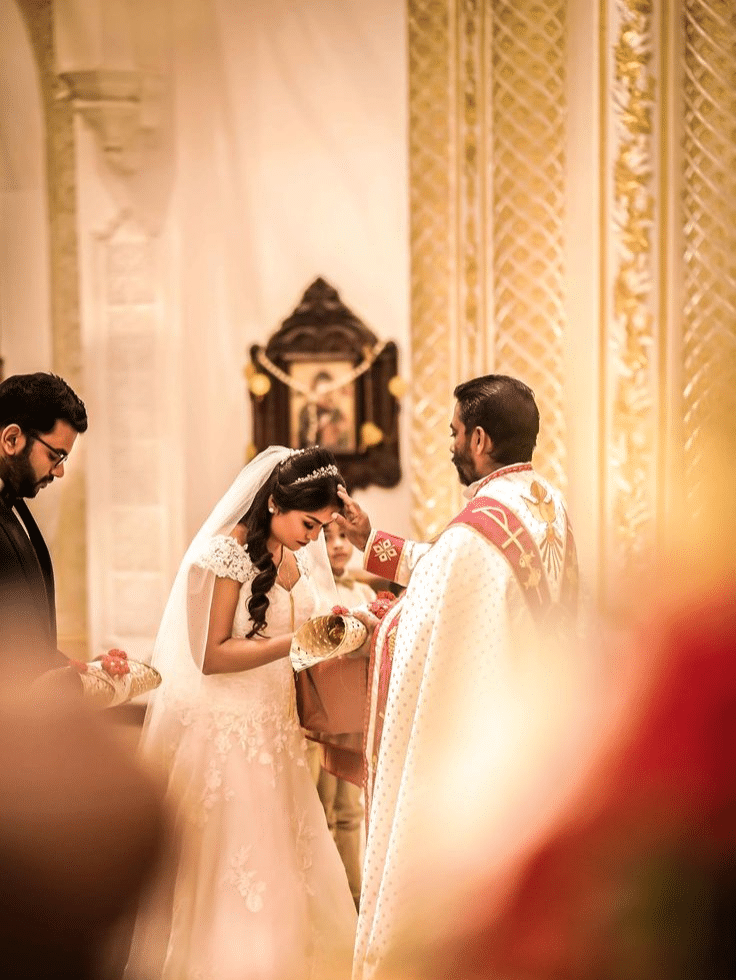
After the vows, the priest extends his hands over the couple in a nuptial blessing, invoking divine grace over their union. The community joins in prayer, offering blessings and thanksgiving.
4. Holy Communion and Final Blessing
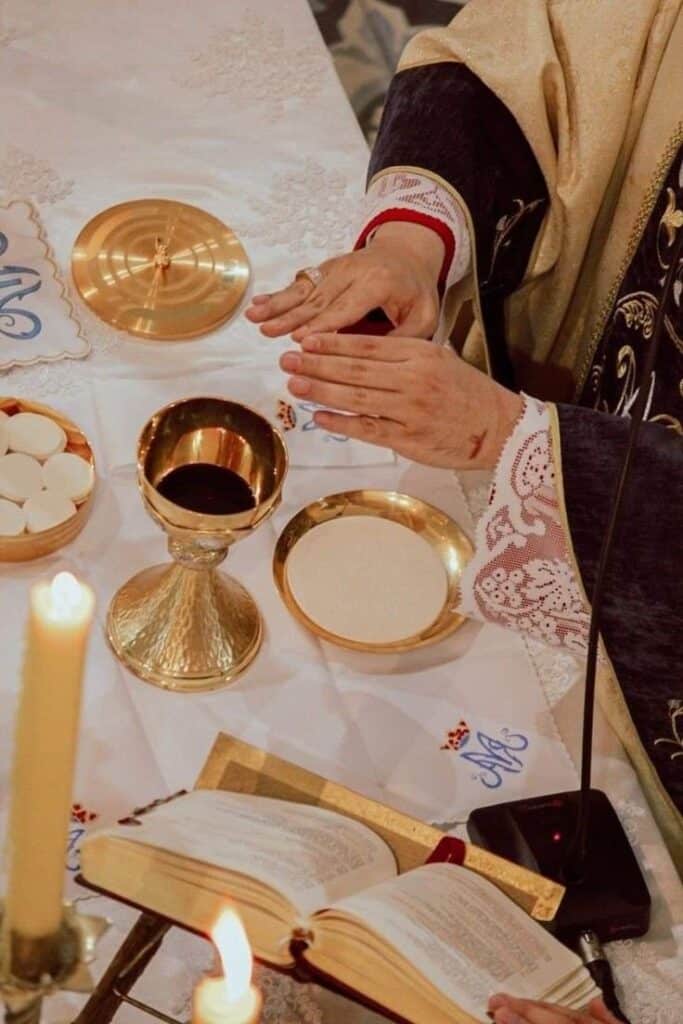
The couple participates in the Holy Eucharist, receiving communion as their first act together as husband and wife. The Mass concludes with a final blessing, followed by the signing of the marriage register witnessed by family members.
5. Church Décor
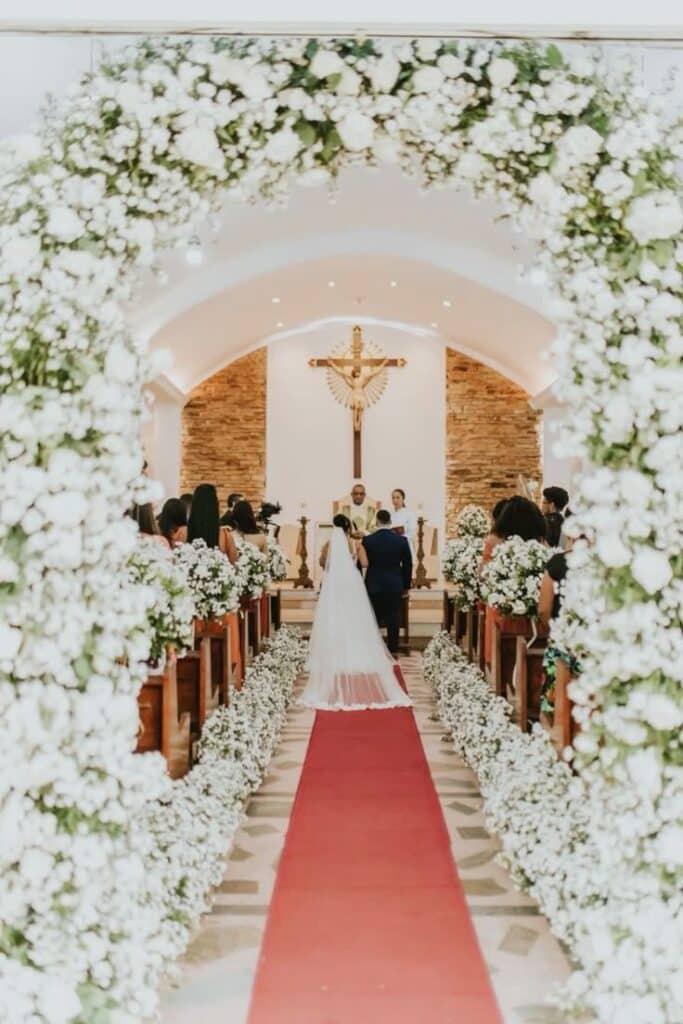
Tamil Catholic weddings favor elegance over extravagance. White flowers, candles, and subtle drapery adorn the altar. Symbols like the cross and Marian statues remain central, reflecting devotion and humility.
The Reception: Joy and Togetherness
After the sacred ceremony, families host a wedding reception that blends Western and Tamil customs. Guests are welcomed with music, traditional meals, and heartfelt speeches.
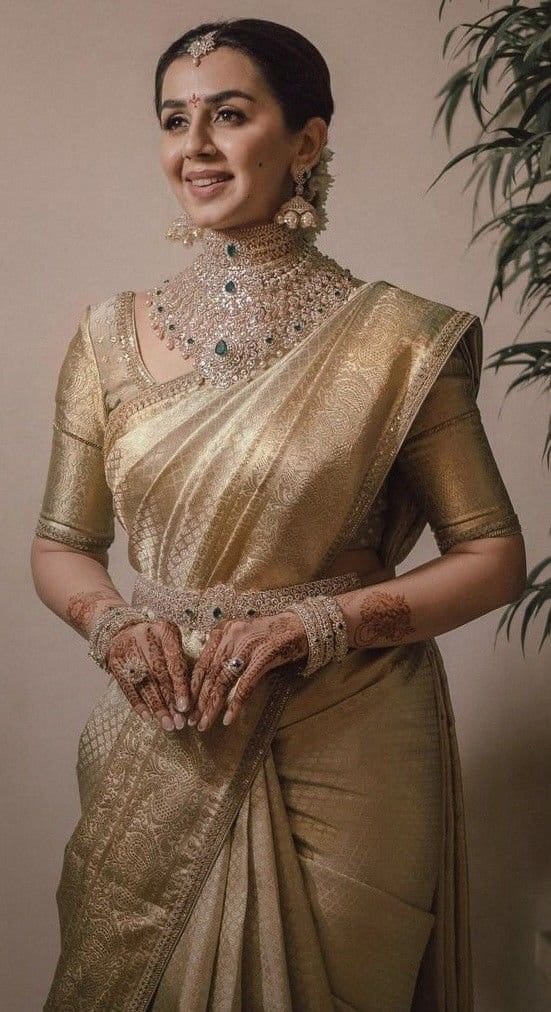
The bride may change into a second gown or a saree for the reception — often in soft gold, ivory, or champagne tones. This change of attire honors Tamil aesthetics while maintaining the grace of a Catholic bride.
Cake-cutting, the first dance, and toasts to the couple create joyful memories that balance solemnity with celebration.
Symbolism and Faith
For Tamil Catholic brides, the wedding is not only about beauty but spiritual meaning. Every ritual — from the pre-wedding prayers to the church vows — is a reminder that marriage is a covenant under God.
Faith plays a continuous role beyond the ceremony. Many couples participate in mass anniversaries, family novenas, and charity acts together, keeping their marriage rooted in grace.
The Modern Tamil Catholic Bride
Today’s Tamil Catholic bride often merges tradition with individuality. Some choose minimalist gowns, while others wear sarees with veils. Some opt for small, intimate ceremonies, while others prefer full Mass celebrations. Yet the essence remains the same — a union built on love, faith, and community.
Social media and photography have also added a modern touch. Brides now curate their looks with Sri Lankan designers, showcasing elegance while respecting church decorum.
Despite evolving styles, the Tamil Catholic wedding remains one of the most serene and meaningful expressions of love — where timeless faith meets Tamil grace.
The Tamil Catholic bride stands as a symbol of devotion, dignity, and quiet strength. Her wedding — from the prayers whispered at dawn to the vows exchanged under the cross — tells a story of two souls joined by faith and family.
In a world where trends change quickly, the Tamil Catholic wedding endures as a sacred and beautiful tradition, reminding us that true elegance lies not in extravagance but in grace, belief, and the blessings that surround a union consecrated before God.