
A bride’s gown often commands immediate attention, but the groom’s attire sets structural balance. The decision between a tuxedo and a waistcoat suit is not merely aesthetic—it signals formality, personality, and the architectural tone of the wedding itself.
In modern weddings, particularly within evolving Sri Lankan celebrations that blend ballroom elegance, garden ceremonies, beachfront vows, and traditional rituals, this decision carries both stylistic and contextual weight.
If you are navigating this choice, here is a clear, strategic guide.
What Defines a Tuxedo?
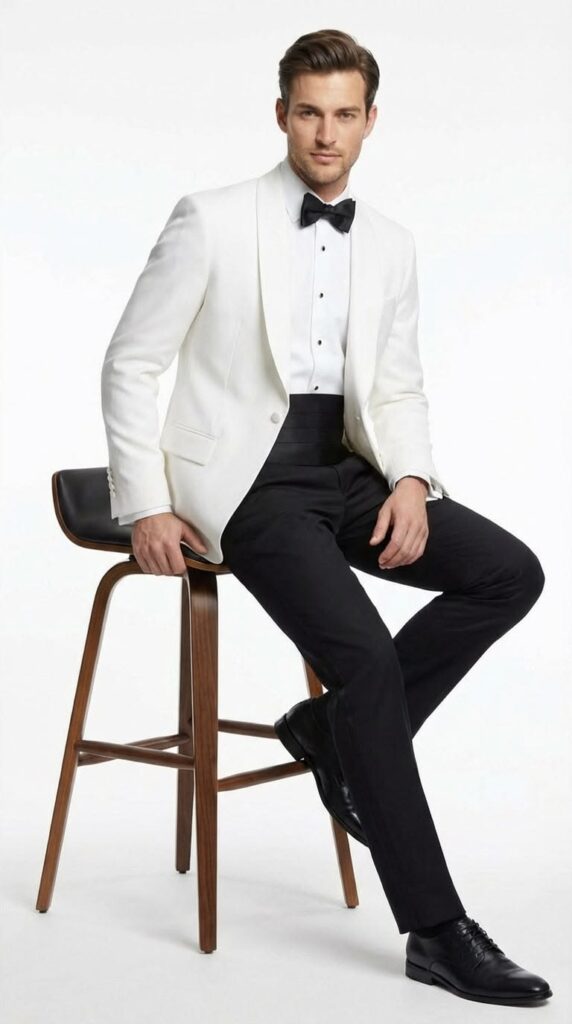
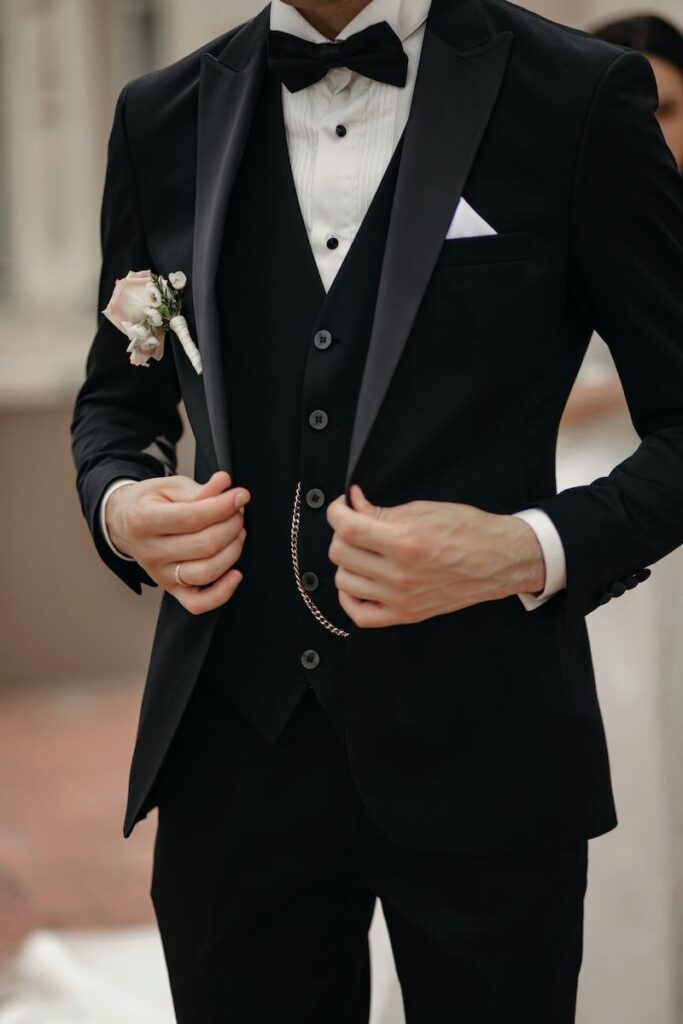
A tuxedo (also known as a dinner jacket ensemble) represents the highest tier of Western evening formalwear. It is distinguished by satin or grosgrain detailing, typically visible on the lapels, buttons, and trouser side stripe.
Key Characteristics
- Satin or silk lapels (peak or shawl collar)
- Matching trousers with satin stripe
- Traditionally styled with a bow tie
- Often paired with a cummerbund or formal low-cut waistcoat
- Patent leather or high-shine formal shoes
A tuxedo is not simply a black suit. It follows established black-tie conventions rooted in European evening dress codes, where refinement and precision defined status.
When a Tuxedo Works Best
A tuxedo performs strongest in:
- Formal evening receptions
- Ballroom weddings
- Black-tie invitation events
- Luxury hotel venues
- Structured, high-glamour settings
Evening lighting enhances the satin detailing. Chandeliers, dimmed ambience, and grand staging visually support the tuxedo’s silhouette. If the wedding aesthetic leans cinematic, polished, and architecturally formal, the tuxedo integrates seamlessly.
What Defines a Waistcoat Suit?
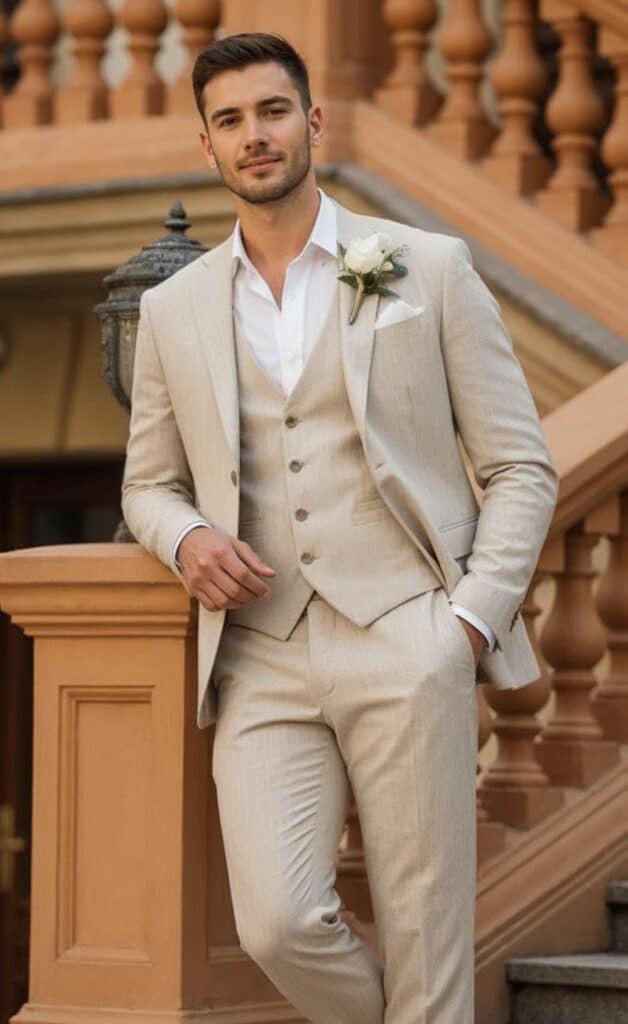
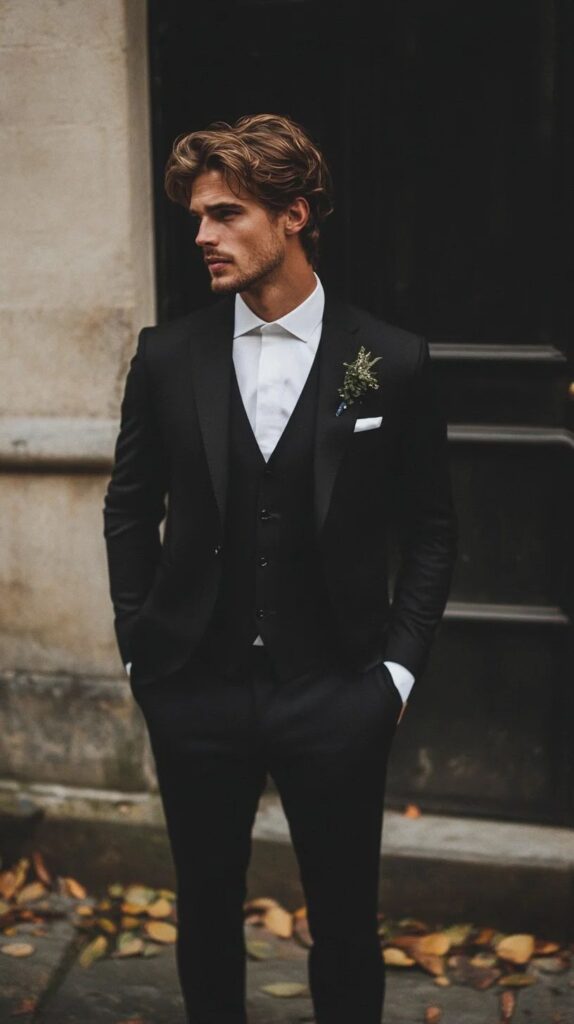
A waistcoat suit—commonly called a three-piece suit—includes a jacket, trousers, and a matching vest. It is versatile, adaptable, and less rigidly formal than a tuxedo.
Key Characteristics
- Coordinated vest beneath the jacket
- Worn with a long tie or optional bow tie
- Broader colour spectrum: navy, grey, beige, olive, textured fabrics
- Suitable for both day and evening events
Unlike the tuxedo, it does not rely on satin accents. It projects refinement without strict adherence to black-tie rules.
When a Waistcoat Suit Works Best
- Daytime weddings
- Garden ceremonies
- Beachfront settings
- Semi-formal receptions
- Cultural ceremonies requiring flexibility
The waistcoat suit adapts well to natural light, open-air environments, and contemporary romantic aesthetics.
Venue Alignment Is Critical
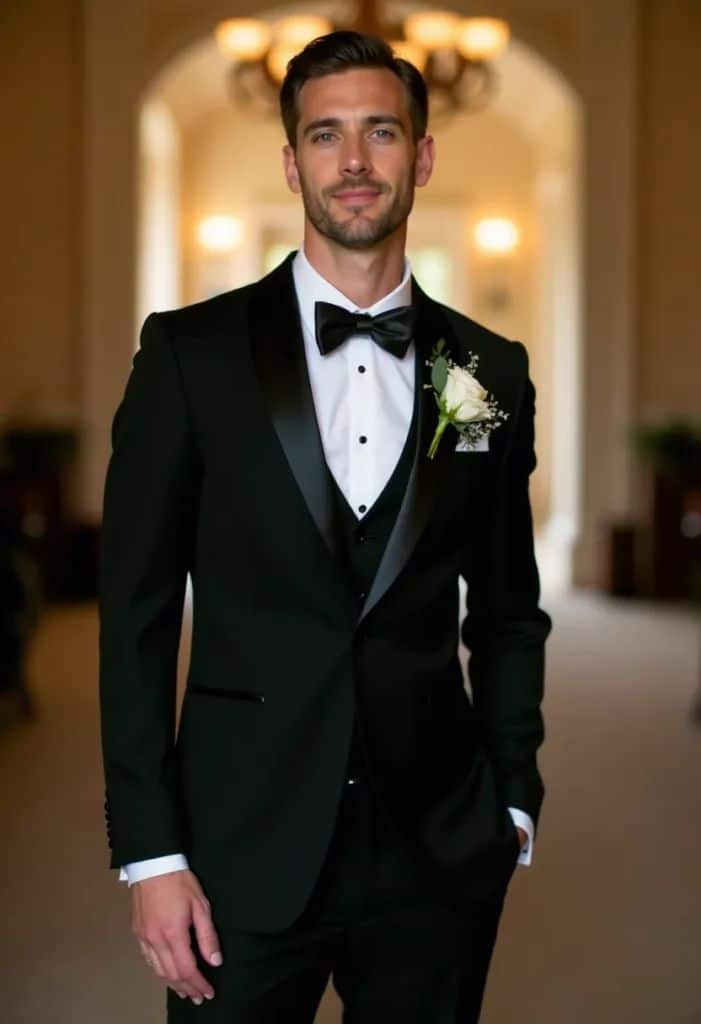
Clothing must harmonise with space.
Ballroom environments—high ceilings, structured décor, formal lighting—favour the tuxedo. The visual scale supports its drama.
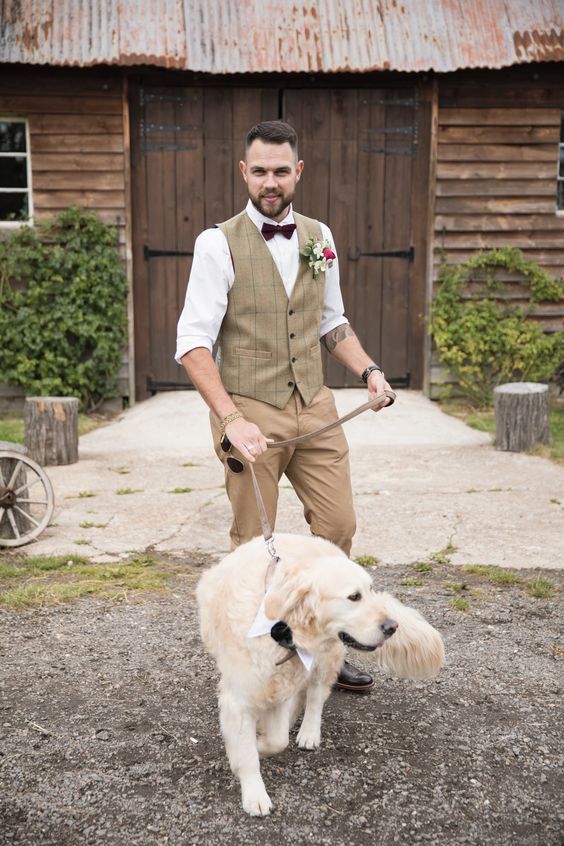
Outdoor or garden venues—organic backdrops, daylight, fluid layouts—often suit a three-piece ensemble more naturally.
If the attire overwhelms the environment or feels underpowered within it, the imbalance becomes visible in photography and staging.
Style is contextual, not isolated.
The Time-of-Day Principle
Traditionally:
- Evening weddings (after 6 p.m.) align with tuxedos.
- Morning or afternoon ceremonies align with suits.
Modern weddings blur these lines, but light remains influential. Evening ambience elevates satin lapels and structured tailoring. Daylight highlights fabric texture, colour nuance, and relaxed silhouettes.
Ignoring timing often results in subtle visual dissonance.
Climate and Comfort
In tropical climates, comfort is not secondary—it directly influences confidence, posture, and stamina.
Tuxedos are frequently constructed with heavier fabrics and internal structure. Under stage lighting or humidity, they can retain heat.
A waistcoat suit offers adaptability:
- Jacket removal during informal segments
- Breathability with lighter fabrics
- Visual polish maintained even without the blazer
For outdoor ceremonies or warmer seasons, fabric selection becomes strategic. Lightweight wool blends, linen blends, or tropical suiting materials perform significantly better in humid conditions.
The Psychological Message
Attire communicates intention.
A tuxedo signals:
- Formal hosting
- Structured elegance
- High ceremonial tone
A waistcoat suit signals:
- Polished adaptability
- Contemporary refinement
- Balanced formality
Neither is inherently superior. They communicate different narratives.
If the wedding design is dramatic, structured, and high-luxury, the tuxedo reinforces that identity. If the wedding is romantic, airy, or modern-minimalist, a waistcoat suit often integrates more fluidly.
Coordination with the Bride
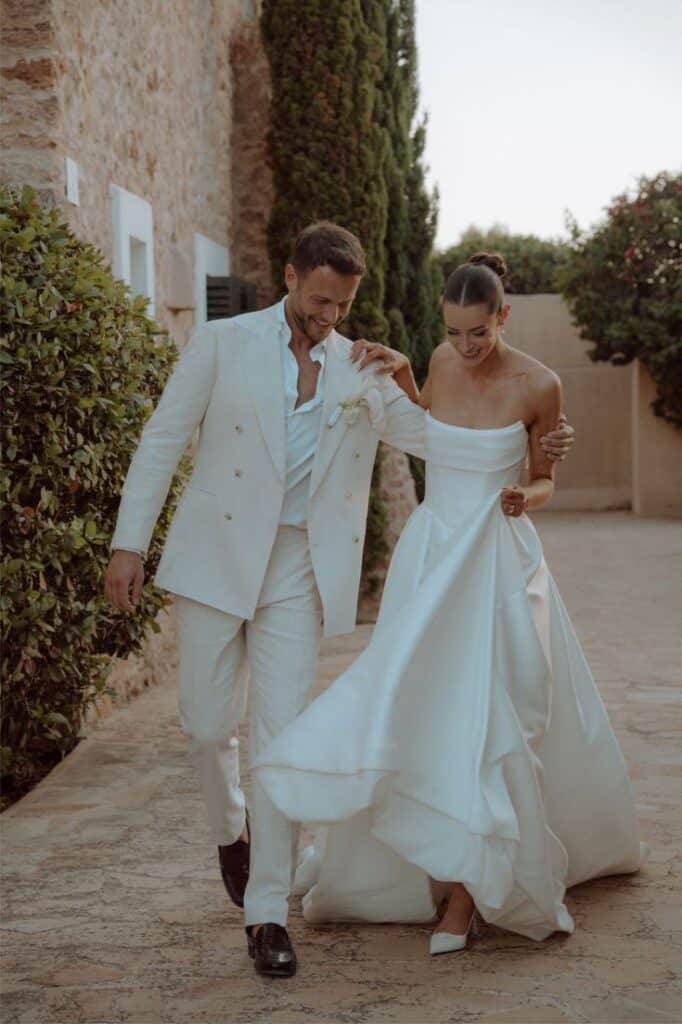
The groom’s attire should complement—not compete with—the bride’s gown.
Consider the gown’s structure:
- A heavily embellished ball gown pairs naturally with a tuxedo.
- A minimalist satin dress allows flexibility between both options.
- A lace or bohemian-style gown aligns well with a tailored three-piece suit.
- If cultural attire is worn during the ceremony, a waistcoat suit may transition more smoothly between traditional and Western segments.
Balance is visual strategy.
Colour Strategy
Tuxedos traditionally remain within:
- Black
- Midnight blue
- Deep velvet variations for modern interpretations
Waistcoat suits offer broader expression:
- Navy (most versatile)
- Charcoal
- Light grey
- Beige
- Muted earth tones
- Subtle patterns or textured weaves
For timeless photography, navy and charcoal remain safest. Overly trend-driven colours risk dating the wedding album prematurely.
Classic tones endure.
Budget and Long-Term Use
Tuxedos—especially bespoke versions—often carry higher cost due to specialised detailing.
A three-piece suit offers greater post-wedding utility. It can be repurposed for corporate events, formal functions, or future celebrations.
If wardrobe longevity matters, the waistcoat suit typically provides stronger return on investment.
However, if the wedding is explicitly black tie, substituting a tuxedo purely for budget reasons can compromise aesthetic coherence.
Fit Determines Everything
Regardless of selection, tailoring is decisive.
Key fit principles:
- Shoulders must sit clean and structured
- Sleeve length should reveal slight shirt cuff
- Trousers should have minimal break
- Waistcoat must lie flat without pulling
An ill-fitting tuxedo looks worse than a well-tailored suit. Precision fit elevates both.
Invest in alterations. Do not compromise here.
Hybrid and Transitional Options
Modern grooms increasingly adopt layered approaches:
- Suit for ceremony, tuxedo for reception
- Velvet dinner jacket for evening transition
- Removing the blazer post-ceremony for relaxed reception styling
These strategies allow both formality and flexibility without sacrificing cohesion.
Cultural Considerations
Weddings blending Western and traditional elements may benefit from strategic transitions.
Some grooms opt for:
- Traditional attire for ceremonial rituals
- Formal Western wear for reception
In such cases, the waistcoat suit often transitions more smoothly into mixed-format celebrations, while the tuxedo dominates purely Western black-tie events.
Photography and Lighting Impact
Fabric behaviour changes under flash and evening lighting.
- Satin lapels reflect more dramatically
- Dark tuxedos create high-contrast silhouettes
- Lighter suits appear softer in daylight
Consulting your photographer about lighting conditions can prevent unexpected visual outcomes.
Attire and lighting are interconnected variables.
Decision Framework
To finalise your choice, assess:
- What is the level of formality specified on the invitation?
- Is the venue architectural and grand, or natural and open?
- What time does the ceremony begin?
- What is the bride wearing?
- Will the attire be reused post-wedding?
- What are the climate conditions?
Answering these questions objectively clarifies direction.
Choose a tuxedo if:
- The wedding is evening and formal
- The venue is ballroom or black tie
- You want maximum structured sophistication
Choose a waistcoat suit if:
- The ceremony is daytime or outdoor
- You prefer versatility and comfort
- You value post-wedding practicality
- The aesthetic is modern-romantic rather than strictly formal
Both options are capable of exceptional impact when selected intentionally.
The correct choice is not about trend adoption. It is about contextual alignment, climate awareness, narrative coherence, and tailoring precision.
When thoughtfully chosen, the groom’s attire becomes more than clothing—it becomes part of the wedding’s visual architecture.
And that architecture should be deliberate.