
Rain and weddings have always shared a bittersweet relationship. For some couples, rain is a symbol of blessings and abundance. For photographers, however, it can present real challenges — unpredictable lighting, drenched venues, difficult angles, and anxious couples hoping for perfect pictures.
Yet rainy-season weddings can produce some of the most cinematic, romantic, and emotionally rich images. With the right preparation, gear, and mindset, rain can transform a photoshoot from ordinary into unforgettable.
This guide explains how to handle wedding photography in Sri Lanka’s rainy weather — from gear protection to posing strategies, lighting techniques, timeline planning, and making the rain itself part of the aesthetic.
1. Plan the Photography Timeline Around the Weather
The number one rule for rainy-season weddings is flexibility.
Check the forecast daily, and again a few hours before the ceremony. Apps like Windy, AccuWeather, and RainViewer give hyper-local real-time updates.
Build buffer time into the schedule, especially for outdoor portraits. Instead of fixed time slots, use flexible windows:
- Before the ceremony (if the rain is lighter)
- Short breaks between showers
- Right after rainfall when the environment looks fresh
Golden rule: Have at least one dry backup time for couple portraits and one covered location always ready.
2. Scout Indoor and Covered Locations in Advance
Outdoor shots might not always be possible, so you must know exactly where to regroup.
Great indoor/covered locations include:
- Hotel lobbies with large windows
- Long corridors with natural light
- Under porches, verandas, and gazebos
- Inside ballrooms using window-side corners
- Staircases with architectural detail
- Under large trees (if the rain is light)
Always choose places with:
- Good natural light
- Minimal distractions
- Enough space for the couple to pose comfortably
Pro tip: Visit the venue the day before to see where the water collects, where the wind blows hardest, and which locations remain usable.
3. Adjust Your Gear for Rain Protection
To shoot confidently, your gear must survive the weather.
Essential protection items:
- Rain covers for cameras (proper covers, not plastic bags)
- Lens hoods to prevent water spots
- Microfibre cloths – carry several
- Silica gel packs inside your camera bag
- Waterproof camera bag or backpack cover
- Water-resistant memory cards
- Quick-dry towels
If possible, use weather-sealed bodies and lenses, but do not rely on sealing alone.
Don’t forget about yourself
If the photographer is uncomfortable, the photos will suffer.
Carry:
- A lightweight raincoat
- Non-slip shoes
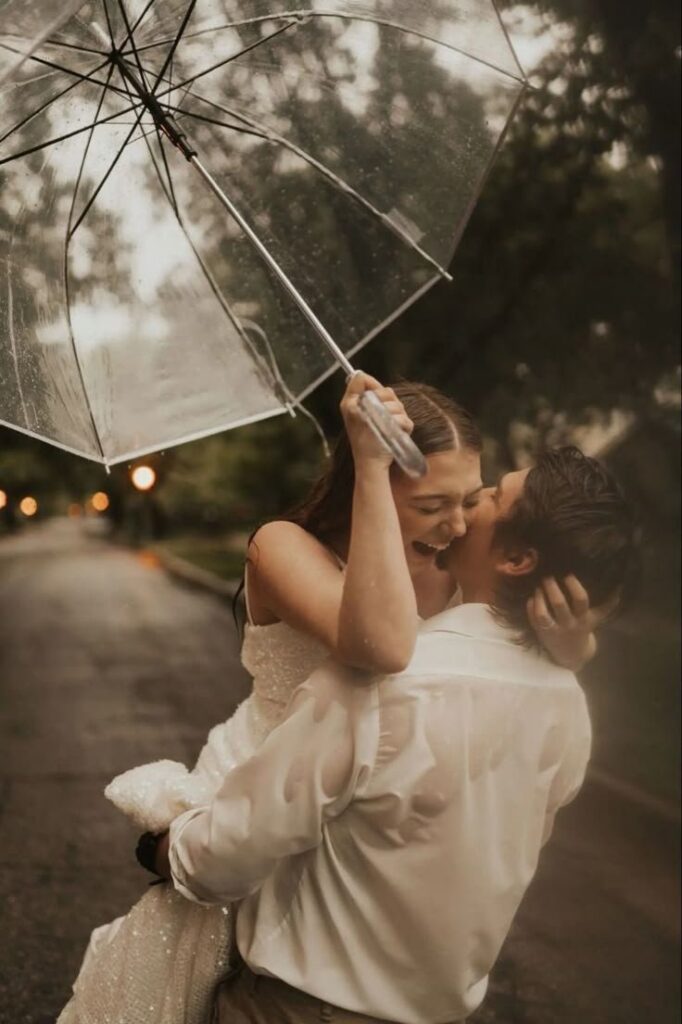
- Umbrella (clear ones look best for photos)
- Hat/cap to keep droplets off your eyes
A comfortable photographer performs better and moves faster.
4. Use the Rain to Create Cinematic Photos
Rain doesn’t have to be a problem — it can be a mood.
Ideas to make rain your creative ally:
Reflection Photography
Wet surfaces create beautiful reflections. Pavements, tiles, and even puddles can double your creative possibilities.
Backlit Rain Shots
Use a flash or continuous light behind the couple. The raindrops will glow, creating a magical, Hollywood-style rain effect.
Umbrella Silhouettes
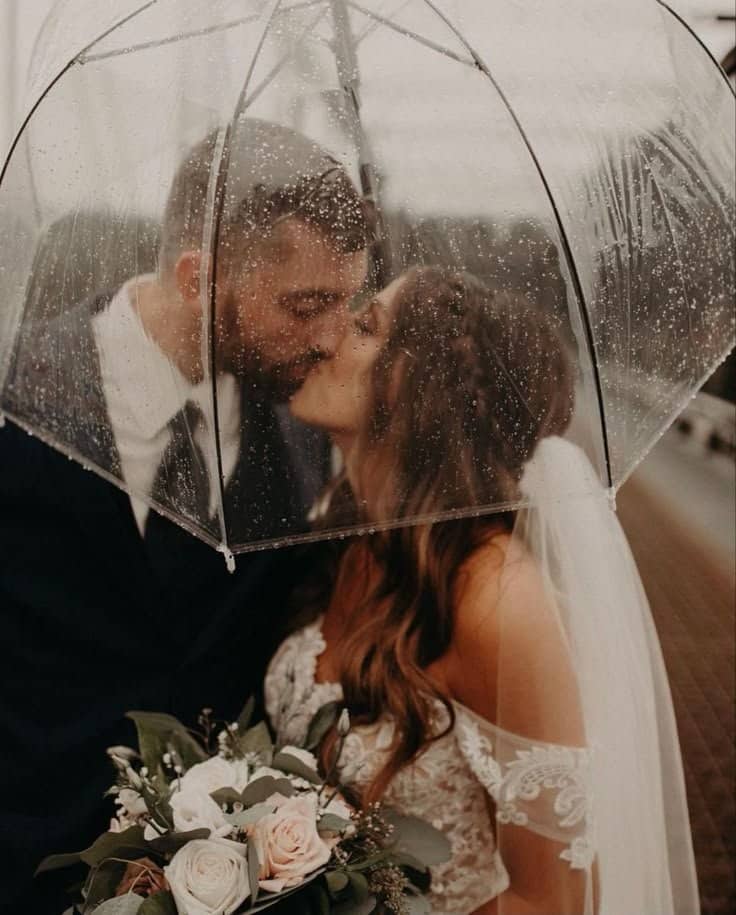
A clear umbrella works best. Keep the couple close, create a silhouette outline, and let the background softly blur.
Raindrop Bokeh
Shoot through a rain-covered window or windshield — it gives a soft, dreamy texture.
Mist and Fog
If the rain is light and the weather cools, a natural foggy backdrop appears. These conditions look ethereal and timeless.
Candid Rain Moments
Laughing under an umbrella, running together, adjusting the bride’s gown — these moments become beautiful storytelling shots.
5. Maintain Safe Lighting Practices
Weather and electricity don’t mix. Follow strict safety steps:
- Keep all lighting stands weighted and stable
- Avoid plugging equipment into exposed outdoor sockets
- Prefer battery-operated lights
- If using flash, ensure your assistant carries a dry cloth
- Never place cables across wet floors
Safety first — for the couple, your team, and your gear.
6. Learn to Work With Soft, Diffused Light
Rainy conditions offer some of the best natural lighting for portraits.
Clouds act as a natural diffuser, creating soft, flattering light without harsh shadows.
Techniques:
- Place the couple near windows for soft side-light
- Use the bright side of a white building as a natural reflector
- Shoot wider to capture the mood and environment
- Increase ISO slightly so you can keep a fast shutter
When used correctly, rainy light can be more flattering than sunlight.
7. Prepare the Couple Emotionally Beforehand
Couples get anxious when rain disrupts the plan.
Your job is part photographer, part storyteller, part calm voice of reason.
Key things to communicate:
- Rainy weddings create unique, beautiful imagery
- Backup locations are already scouted
- Their photos will look cinematic and romantic
- You can still deliver an entire album — just differently
- They must trust the creative process
When the couple feels relaxed, they photograph better.
8. Carry Props That Make Rain Photos Easier
Simple props can elevate rainy-weather photography.
Recommended props:
- Clear umbrellas
- White umbrellas for softer light diffusion
- Shawl or pashmina for the bride
- A clean mat to protect the dress hem
- Hand towel for quick touch-ups
- Hair clips or pins for emergency fixes
These items help maintain comfort and reduce stress, allowing the couple to stay natural and confident.
9. Shoot in Short Intervals and Work Fast
Rain tends to come in bursts. Use the gaps.
Your workflow should be:
- Prep couple and assistant under shelter
- Move quickly to the chosen spot
- Capture the key frames
- Return under cover before the next downpour
Keep your shot list ready, so every minute counts.
10. Edit to Enhance the Rainy Aesthetic
Rainy-day photos benefit from a specific editing style.
Editing tips:
- Enhance reflections and wet textures
- Boost contrast for backlit rain shots
- Add warmth to counter grey skies
- Use soft highlights for a dreamy look
- Bring out greens and earth tones for outdoor venues
- Maintain skin tones naturally — don’t over-correct
A polished edit can transform the entire mood.
Rainy-season wedding photography is all about mindset and preparation. Instead of fighting the weather, embrace it. Rain adds emotion, drama, mood, and a cinematic sense of storytelling. With proper planning, the right gear, flexible timing, and a calm approach, you can deliver a wedding album that is not just beautiful — but unforgettable.
When handled correctly, rain becomes a creative opportunity, not a complication.